Search
Search Results
-
Climatic water balance in Hamelmalo, Eritrea
69-76Views:471Agricultural production is an important sector for peoples to live, but it is highly affected by climate change. To have a good production we need to understand the climatic parameters which adversely affect production. Hamelmalo, which is located in the semi-arid area of Eritrea, is vulnerable to climate change and this is realised in the total production loss. Nevertheless, there is no concrete reference about the climate of the region due to lack of data for a long time. Changes in precipitation (P), evapotranspiration (ET) and, implicitly, in the climatic water balance (CWB), are imminent effects of climate change. However, changes in the CWB, as a response to changes in P and ET, have not yet been analysed thoroughly enough in many parts of the world, including Eritrea. This study also explores the changes of the CWB in the Hamelmalo region, based on a wide range of climatic data (P, relative air humidity and evaporation pan necessary for computing potential evapotranspiration (PET) with the pan evaporation method) recorded at Hamelmalo from 2015-2019. This analysis shows that the annual cumulative CWB for Hamelmalo is negative in 67% of the years. The dry season without precipitation leads to negative CWB and the change in CWB only starts from the raining or crop season. Based on this recent study, 2015 had the highest PET and lowest P, and this resulted in the lowest CWB in the investigated period. Opposite to this, 2019 had lower PET and highest P, which led to the highest CWB. However, the monthly values of CWB did not correlate with the annual P or ET. On the base of our study, it can be concluded that PET and P were very variable in the investigated years and P was the most influential elements of CWB.
-
Dimensionality Expressed by Caseendings and Spatial Prepositions
7-15Views:212The purpose of this essay is to investigate some of the uses of English prepositions and Hungarian case endings employed to express spatial relations. The observation of invariant mistakes Hungarian native speakers learning English make initiated the investigation. The questions raised are: (a) where do the two systems match and where do mismatches lie, (b) how do language users perceive the world, and (c) do speakers observe spatial relations as two-dimensional or three-dimensional cognitive models? Do different languages see the same thing as either three-dimensional, or two-dimensional?
Abondolo (1988) gives an adequate morphological analysis of ten Hungarian case-endings (inessive, illative, elative, superessive, delative, sublative adessive, ablative, allative and terminative) used in spatial reference, which give a closed set in references made to factors, such as (1) location which can be broken down as interior vs. exterior location with the latter being further analysable as superficial and proximal, and (2) orientation which can be analysed as zero orientation (position), source and goal. In addition to those in this list, two other case endings (genetive/dative and locative) are also used for expressing spatial relations but the last is only a variant of the inessive and superessive case-endings and is only used with place-names. The set is closed in the sense that the same item is meant to refer to the same sort of spatial relation in every case. Language textbooks, c.f. Benkő (1972) seem to suggest a neat match between the above Hungarian case endings and their English prepositional counterparts, e.g. London-ban (inessive) = in London.
The picture, however, is far from being so clear-cut. The data, which were taken from various dictionaries and textbooks, show that the choices of both the prepositions and the case endings listed above depend on how the speaker considers factors (1) and (2) and that proximity is very important. Instead of a one-to-one match between the prepositions and the case endings, we rather find that the above case endings will match a dual, and in some cases a tripartite system of prepositions with the correspondences found in the two languages, which yield the following chart: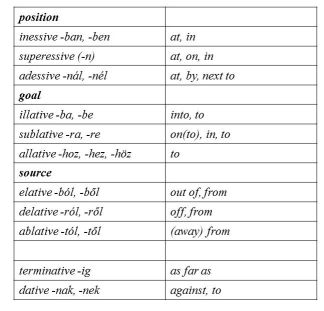
We suggest that languages may view or map the same physical entities in different ways, for example along surface vs. volume or goal vs. passage, etc.
Furthermore, we also find it possible that it is the language specific, inherent coding of the nominal phrase that decides – in many cases – upon the choice of prepositions and case endings. -
Influence of Hydrological Parameters on the Biodiversity of the BerettyóRiver I.
215-229Views:400The DIRECTIVE 2000/60/EC OF THE EUROPEAN PARLIAMENT AND OF THE COUNCIL orders the measurement of the state of natural and artifical waters. We therefore applied environmental qualification methods, which allow inductions of the searched area in environmental management, conservation and water quality protection points of view. These methods are accepted in interdisciplinary sciences, and are in use in Hungarian and international practice. We applied the range data measured along the Berettyó River, and ratified by the remote sensing, to count hydrological-hydraulical attributes of the stream, by the framework of the Hec-Ras programme. We processed the physical, chemical and biochemical water qualifications, determined the MMCP-index (the point-system of the Hungarian macrozoobenthos taxons), and estimated the Spencer index-numbers, which were based on complex environmental qualification and bioindication. Appointed, that the different results of researches are not inconsistent. This results together the spatial analysis reveal the natural and anthroponetic specialities of the river and the landscape, which determine the environmental flavours and biodiversity. The bioindicators represent better environmental status, than the physical, chemical and biochemical parameters. The natural conservationist importance of drainage canal network of Bihari-Plain is appreciated by these facts.
-
Heat treatment and microbial digestion of poulty feather for biogas production
215-219Views:428The aim of this research was the elaboration of the technological parameters of heat pre-treatment and microbial digestion of poultry feathers for biogas production. Feathers were treated at 70, 100, 140 °C, and subsequently digested by Bacillus licheniformis, or keratin disintegrator bacteria. Investigations focused on the optimalization of parameters influencing poultry feather biodegradation. The optimal range of pH, temperature,
feather size and bacillus:feather ratio were determined in the experiments, as well as the analysis of relationship between the examined parameters. In order to be able to track the dynamics of the biodegradation, we determined the extinction level of the liquid phase of the biodegraded material in the different experimental treatments. The results showed that the rate of hydrolysis was significantly higher in the treatments with bacteria than in the treatments without it. Regarding the pretreatments at 70, 100 and 140 °C, the digestion of feather was the most intensive at 70 °C. The most extensive digestion was observed in case of 1:3 feather:water ratio. The highest intensity of feather digestion was
detected in the treatment with 1% microbe ratio. -
Cytochrome b diversity of Hungarian Botrytis cinerea strains
18-21Views:286In the mitochondrion of eukaryotes, cytochrome b is a component of respiratory chain complex III. Cytochrome b is encoded by the
cytochrome b (CYTB) gene located in the mitochondrial genome. The fungicidal activity of QoIs relies on their ability to inhibit mitochondrial respiration by binding at the so-called Qo site (the outer quinol-oxidation site) of the complex III. Since their introduction, QoIs (like azoxystrobin) have become essential components of plant disease control programs because of their wide-ranging efficacy against many agriculturally important fungal diseases like grey mould on various crops. QoI resistance primarily arises from a target-site-based mechanism involving mutations in the mitochondrial CYTB. As the management of grey mould is often dependent on chemicals, the rational design of control programs requires the information about the diversity of genes connected with resistance in field populations of the pathogen.
Monospore B. cinerea field isolates has been collected during 2008-2009 from different hosts in Hungary. PCR fragment length analysis
indicated the high frequency presence of type large intron in the isolates while in a few strains G143A substitution could also be detected.
These results indicated the heterogeneity of CYTB in the Hungarian B. cinerea populations, which possibly involve the heteroplasmy of this
mitochondrial gene, moreover indicates the existence op azoxystrobin resistant populations in Hungary.
This work was supported by NKFP-A2-2006/0017 grant. Erzsébet Fekete is a grantee of the János Bolyai Scholarship (BO/00519/09/8). -
Comparative study of newly-bred black locust clones with regard to photosynthetic rate and water use efficiency: early evaluation
5-10Views:590Black locust (Robinia pseudoacacia L.) is one of the most important tree species in Hungary, due to its positive economic impacts. Research to increase its yield, improve its stem quality and enhance its drought tolerance has been ongoing since the 1960s. Of the current research works in this field, the clone trial of the Forest Research Institute, University of Sopron, established in 2020 in the Nyírség region, is worth highlighting. In this experiment 4 newly-bred clones and a state-approved black locust cultivar ('Üllői') are being tested. In the summer of 2022, ‘on site’ measurements of assimilation parameters – net assimilation (An), transpiration (Tr) – were carried out using the LI-6800 portable photosynthesis system. From the data obtained, the water use efficiency (WUE) was calculated. The results of the statistical analysis (Kruskal-Wallis H test) have shown significant differences (p < 0.05) between the clones for all three parameters (An, Tr, WUE) tested. The NK2 clone has performed the highest value for all the parameters studied. However, no significant differences were found between clones NK2 and PL040 for Tr or between NK2 and control ('Üllői') for WUE. Studies of this kind contribute to the improvement of black locust growing through the production and selection of cultivars, which are relatively resistant to the negative effects (drought) of climate change.
-
The effect of different shading net on the Quantum Efficiency of PS II in chilli pepper cultivar ‘Star Flame’
21-23Views:569The study was undertaken to identify the effect of different shading net on the quantum efficiency of PS II on ‘Star Flame’ chilli pepper (Capsicum annuum) over a period of time cultivated under plastic house environment. ‘Star Flame’ pepper was grown under red shading net and samples without shading were used as control. Analysis of photosynthetic activity revealed a significant difference (p<0.05) between Fv/Fm values in control and red shading at the end of July (p = 0.031) after the first harvest. Chlorophyll fluorescence parameter Fv/Fm reflects the maximum quantum efficiency of photosystem II (PS II) used in the detection of early stress in plants.
-
Utility of Winter Wheat According to Visual and Microbiological Fusarium Infection, as Well as Toxin Examination
26-34Views:214In 1998 the Fusarium infection was studied visually and microbiologically and also F-2, T-2, HT-2, DAS and DON contamination were measured using 22 winter wheat samples. The correlation between the different parameters of 22 wheat samples were determined by regression analysis. According to our results we can state the following.
There is no significant connection between the results of visual, microbiological and toxicological examinations. This means that no certain conclusion can be drawn about the toxin contamination of samples – which is a determining factor of its utility – based on the visual symptoms and the plate dilution method.
Our results indicate however – though it is not proven statistically – that those samples in which the Fusarium infection did not exceed the limit of the standard, also had low toxin contamination, therefore they can be used as components of forage.
It is a considerable problem, however, that according to the visual qualification, such samples are excluded from the later utilisation, wherein the toxin contamination does not justify such action. Therefore, it is necessary to examine the toxin content of those samples which show high infection by visual symptoms. To reducing the number of expensive toxin examinations it would be advisable to change the currently used 0,5% limit which is indicated in the standard for a higher value of infection, for example to 2%, as recommended by Mesterházy (1998). -
Rural development possibilities of certain small regions of the schengen zone
145-151Views:120The recession after the political changes in Hungary dramatically hit the cross-border regions which economies were neglected even in the communist times. In this paper I focused on the introduction of four small regions near the Hungarian-Ukranian border. I tried to analyse the aptitude of this regions and the capability of joining the cross-border co-operation. According to my analysis, these small regions are facing exceptionally serious, partly interited and new emerging problems as far as the employment, the qualification of labour, the standard of
infrastructure are concerned. These problems even deteriorate the further development possibilities. I also focused on the most imminent development tasks facing the small regions falling behind. -
The effect of crop year and agrotechnical factors on the yield of various maturity groups of Limagrain maize hybirds
19-23Views:291The Limagrain maize hybrids in different maturity groups were examined at the Látókép Experimental Station of the Centre of Agricultural Sciences and Engineering, University of Debrecen on a calcareous chernozem soil with loam texture, between 2001 and 2007 in a multifactorial long-term field trial. Doses of fertilizers: 1 N:0.75 P2O5:0.88 K2O fixed proportion of NPK doses. The basic dose of nitrogen is 30 kg ha-1. The application of fertilization was 1, 2, 3, 4, and 5 times more than the basic dose, beside of untreated control. The long-term field trial is performed in none irrigated and in irrigated version.
The goal of the study was to analyze the effect of precipitation (environment factor) in one hand, and to evaluate the effect of fertilization and irrigation (agrotechnical factors) on the yield of maize hybrids in different maturity groups in the other hand. At the same time I studied the effect of interaction of different factors on the yield of maize.Analysis the yield of Limagrain hybrids revealed: the years considerably affected the level of the yield. In dry years the yield was 1.351 t ha-1 less, than in rainy years. As the effect of fertilization the yield increased, the statistically proved biggest increment was at level of 90 kg N ha-1. Evaluating the maturity groups, FAO 300 hybrids reached higher level of yield.
In non irrigated conditions in the average of the seven years 60 kg N ha-1 was sufficient to reach the maximum yield. The efficiency of fertilization on yield in irrigated version increased, 120 kg N ha-1 assured the reliable level of yield.
Without irrigation in comparison to the results of FAO 200 group, with the growth of FAO numbers the yield is increasing in all cases. The most significant increase was at FAO 300 (3.562 t ha-1). With irrigation the greatest difference in yield was in FAO 400 (+2.720 t ha-1) compared to FAO 200. -
Regional strategies serving competitiveness
97-101Views:280In my study titled “Regional strategies serving competitiveness”, I examine the regional strategies whose development and implementation in practice play a determinant role in the medium- and long run economic and social development of the given region. The study primarily focuses on the infrastructural basic investments that are essential from the aspect of creating a knowledge-based information society. The study also deals with a stakeholder analysis used by investors in order to focus on the quality of state administration and institution system.
-
The changes of the most important quality parameters of szegedien triticale cultivars in long-term fertilization trials
21-26Views:549We were monitoring the quality changes of 2 triticale cultivars from Szeged (GK Rege and GK Szemes) in Fülöpszállás, Hungary, in a longterm fertilizer trial in 2012/2013 and 2013/2014. The following fertilizer combinations were used: untreated control, single applied N and single applied PK, 30 and 60 kg ha-1 N or PK, and N and PK together in 30:30, 60:60 ha-1 ratio. We measured the following quality parameters: kernel hardness, crude protein content and farinograph quality number for wholemeal flour.
Based on the results, the N fertilization treatment was beneficial to the tested triticale culticars in terms of kernel hardness and protein content as both indicators increased. The efficiency of the treatment was proportional to the N dose rate. On the other hand, the applied PK treatment decreased the kernel hardness and crude protein values. On these two parameters, the PK free, and high N dosage treatment (N60P0K0) had the most positive effect. However, the single applied N dose had no significant effect on farinograph quality numbers of the wholemeal flours, but PK dose had significantly positive impact on the tested cultivars. The N30P30K30 treatment resulted in the highest farinograph quality number, thus the low PK and low N combination was the most efficient treatment. The correlation analysis of the tested quality parameters showed positive correlation (0.9965***) between kernel hardness values and crude protein contents. Nevertheless, we found strong negative correlation between kernel hardness values and the farinograph quality number of the wholemeal flours (-0.9720***), as well as in the case of crude protein contents and farinograph quality number of the wholemeal flours (-0.9796***).
-
‘Kindergarten’ keeping-system in farrowing house: effect the socialization of piglets on weight performances, fecal cortisol metabolite level and post-weaning behavior
167-174Views:452This study aimed to examine whether litters’ let-together system before weaning (‘kindergarten-system’) has any stress effect and effect on post-weaning behavior, respectively. One week before weaning piglets were socialized by removing four adjacent farrowing crate walls. After weaning, piglets from the same experimental groups were housed in the same rearing crates. The piglet’s body weight was measured at birth than weekly till the 7th life-week. Fecal cortisol metabolites were measured for evaluation of the adrenocortical activity. Personal observation and evaluation were carried out for behavioral analyses after weaning. There were no significant differences in weight development and cortisol metabolite levels between the control and experimental groups. Behavioral analysis showed that pigs grow up in a socialized system, rapidly evolve ranking in the rearing crates, and the self-maintenance and social behavior were more pronounced. In control groups, the activity involving movement (exploring, walking, and running) was much more decisive. Recent work suggested the beneficial effect of the ‘kindergarten’ system in the farrowing house in animal welfare aspects.
-
Analysis of the Grey Colour Intensity in Horses
3-7Views:306An investigation of different grey coat colours and a connection between colour and age of horses was carried out with two Hungarian State Studs: Bábolna and Szilvásvárad. For objective measurement of coat colour Minolta Chromameter (Model CR-210) was used. The average value of L (lightness) level by Shagya and Pure Bred Arabian horses was 63.83 ± 2.23, for Lipizzan horses was x=71.00 ± 2.29 respectively. In each stud older horses (over 10 years of age) have a flea-bitten colour stage, which decreased the L value considerably. Changes in coat colour in connection with the greying process did not show an evident tendency in the three breeds.
-
Comparative analysis of Staphylococcus aureus strains by molecular microbiology methods
34-39Views:560Staphylococcus aureus is a very important pathogen for dairy farms and milk processing plants. Subclinical mastitis is often caused by this species, and it can contaminate bulk tank milk when milking cows are suffering from mastitis. Additionally, thermostable enterotoxins (SE) produced by some types of this bacterium can cause food poisoning.
The aim of our research was to examine the number of S. aureus in bulk tank milk in two dairy farms and the enterotoxin-producing ability, genetic relation (pulsotype) and antibiotic resistance of S. aureus strains from different sources (bulk tank milk, udder quarter milk and environment).
The results show that the mean number of S. aureus of bulk tank milk of two farms significantly differed (P<0.05). Fourteen isolates were selected for further molecular genetic studies (five isolates were from bulk tank milk and nine isolates were from udder quarter milk). S. aureus was not recovered from the environmental samples. Three of the fourteen isolates (21.4%) tested by multiplex PCR were positive for SE genes. Two isolates carried one gene (seb) and one isolate carried two genes (seg and sei). The fourteen strains were classified into three pulsotypes and two subtypes at 86% similarity level. Isolates from bulk tank milk (n=5), were divided into 2 pulsotypes (A, C) and one subtype (C1). The isolates from udder quarter milk (n=9) belonged to three different pulsotypes (A, B, C) and two subtypes (A1, C1). The distribution of pulsotypes in the present study revealed genetic relationship between S. aureus isolated from udder quarter milk and bulk tank milk. This could be explained by the fact that in farms with a high number of infected cows, these cows could represent the main source of contamination. The results of the antibiotic resistance investigations show, that all strains were susceptible to methicillin, cefoxitin, lincomycin, tetracycline, erythromycin and sulfamethoxazole/trimethoprim. Thirteen out of fourteen strains were resistant to penicillin (A and C pulsotypes, A1 and C1 subtypes) and just one isolate was susceptible (B pulsotype) to all antibiotics tested. -
Statistical comparison of soil analysing results of chernozem soils
93-99Views:358The soil fertility was degraded as a result of unreasonable tillage, therefore the application of site-specific nutrient replacement is necessary. It is essential for the application of precision fertilization to know the location, extension, soil properties and nutrient-supply of the different soil types of
cultivated areas.
We collected soil samples from 580 hectares of land in 2006. Soil samples were collected from every 5 ha in 30 and 60 cm depths during Spring from 20.05.2006 to 12.06.2006 and again in Autumn from 09.19.2006 to 02.10.2006. Soil samples were analysed at the Department of Agricultural Chemistry and Soil Science of DE-ATC.
The two examined soils are slightly calcareous, weakly saline, poor in zinc. The calcareous chernozem soil is slightly acid, the content of humus, nitrogen, phosphorus and potassium is medium in this soil. The meadow chernozem soil is slightly alkaline, and properly supplied with humus and potassium, and middling supplied with nitrogen and phosphorus. The meadow chernozem soil is more heterogenous in soil plasticity, lime, saline, nitrogen phosphorus and potassium content and less heterogenous in pH and zinc content than the calcareous chernozem soil.
Standard deviation of measured values in pH, soil plasticity, humus and nitrogen content significantly differ between the examined soil types. The soil plasticity, pH, humus, nitrogen and zinc content significantly differ among calcareous chernozem soil and meadow chernozem soil, but the difference in phosphorus content can be statistically proven only in case of Spring soil sampling. -
Opportunities of utilization of real-time ultrasound technique in beef cattle breeding
45-52Views:368The goal of the authors was to evaluate the repeatability and accuracy of real-time ultrasound technique under Hungarian conditions. Ribeye area was measured at first time on live animals, before the day of slaughtering with Falco 100 ultrasound equipment in Charolais fattening bulls. Ultrasound pictures were traced at two times by the same operator. After slaughtering, ribeye area (REA) was measured on the carcass by planimeter at the same anatomical point like ultrasound measurements. Statistical analysis was carried out to examine the relationship between carcass and ultrasound REA. After it, repeatabilty was established by comparing the ultrasound pictures twice.
-
Agronomic bases of precision barley production
217-220Views:222To ascertain the importance of individual preciosion factors in achieving yield and quality of malting barley, we established a multifactor
experiment at the research station of the Slovak University of Agriculture in Nitra in 2009 and 2010. Four variants of fertilization, 2 ways of soil cultivation and four varieties 'Bojos’, 'Kangoo’, 'Marthe’ and 'Xanadu’ were observed. From the quality indicators the nitrogen content (%) was observed. The results were statistically analyzed by using a multifactor analysis of variance by using Statistica 8, the program Statgraphics. The difference between years was statistically significant (1.87 t ha-1) in favour of 2010. The difference was also significant between the varieties 'Bojos’ and ’Kangoo’(1.07 t ha-1), respectively. 'Martha’ and 'Xanadu’ as well as 'Kangoo’ (0.56 resp. 0.33 t ha-1). Conventional soil cultivation in
comparison with a minimalization technology, demonstrated a tatistically insignificant increase of yield. Significant differences were obtained between the variants of fertilization. Treatment by using Condit (b-var.) showed a very positive impact in climatic favorable year (2010) with a yield result of 7.42 t ha-1. In comparison with an untreated control, the difference in yield was 0.89 t ha-1. A significant increase of yield was achieved by using the combination of solid fertilizer with foliar fertilizer (LAV + Hakofyt, var.c) 0.47 t ha-1. The crude protein content was statistically influenced by a variety and year. In 2009, the crude protein content was above average (12.38%). Significantly lower attributes were achieved in 2010 (9.90%). From the studied/observed varieties the lowest crude protein content was showed by a variety 'Kangoo’ (1.68%). -
Development of seed analyses by means of various matrix solutions and the MALDI-TOF MS technique
53-57Views:813The earth's population is growing steadily, currently accounting for about 7.3 billion people. Population growth causes food demand to rise, approximately 36 million people die each year due to starvation or related diseases. One solution to this problem is the continuous examination and development of the agricultural economy. In this study, matrix-assisted laser desorption/ionization time-of-flight mass spectrometer (MALDI -TOF MS) were used to analyse of sunflower, soybean and hemp. In order to analyse the protein of maize, this method has already been applied. However, for sunflower, soy and hemp, it is necessary to develop a sample preparation method. Choosing the optimal matrix solution for ionization the traget molecule is an essential part of developing the method. Our aim is to compare two different matrix solutions (α-HCCA, SA matrix), based on the properties (intensity, noise ratio, value of spectra) of the spectra.
-
Effects of the development of production factors on productivity
13-18Views:253In every economic sector, the enacted and expected quality of the products strongly affects its market entry and subsistence. The aim of management is success, competitiveness and subsistence that require adequate human and material resources and enough production stock. We must also notice that the quality of tools and instruments significantly influences work productivity. This applies to both plant production and animal husbandry.
The author researched milk production factors with methodical observation, document analysis and interviews. Data were collected with a ten-year interval, thus this assay can highlight the field, volume and sources of investments during this period and that the production stock increased in most farms and decreased in few. The data also shows the influence of investments on work productivity - there are differences between farms of equal size, so there are still ways of development.
-
Growth and yield patterns of black locust (Robinia pseudoacacia L.) sample trees affected by site conditions: case studies
125-128Views:337The trees removed from the long-term experiment plots are available for the measurements as lying trees. Through the determination of the volume in sections along the stem, the stem form, the stem volume and other factors can be specified. The comparison of the stems of individual trees of first and third yield classes of black locust (Robinia pseudoacacia L.) stands shows that site conditions have a main effect on the yield (mean tree volume). The difference can be as high as 53% at the age of 30 depending on the sites. To determine the growth patterns based on tree volume is rather a new approach in the light of the relevant literature. The obtained results also highlight the importance of choosing the appropriate tree species for a given site.
-
Agrobotanical Analysis of Bean (Phaseolus vulgaris L.) Equilibrium Populations Suitable for Regional Land Cultivation
148-152Views:164The local bean landraces maintained at small-scale farming level should have importance as complementary source for completion of plant genetic resources with potential role in local land cultivation. Also, they should be used as primary material in breeding activities targeted on improving the foodstuffs quality. In the research were used especially landraces collected in Nyírség, Körös-mellék and Tápióvidék region. Our main objective was to reveal the relationship between the adaptation ability of landraces and the distance from their original collecting place. For that reason the location of the experimental plots was choosen by taking into account that they must be checked in each region, on it’s original region and similarly in other two different regions. On the base of the recorded agro-morphological traits we can get answers on the shaping of adaptation ability, and in the same time by a general chemical characterisation we should know more about the variation of qualitative parameters with a potential economical role. In the designing of experiment a main importance had the conditions where the research is taking place. All activities related to the maintenance of experiment were done in frame of a low input agricultural system to emphasize as much as possible the natural endowments of regeneration places.
-
Evaluation of Origin and Conformation of Excellent Cows with Long Productive Lives
13-17Views:336In the last few decades a new intensive milking stock has developed as a result of breed-converter crossing in Hungary. Beside this reproduction biology of the population was affected adversely by the keeping-, and feeding technology. Serviceable lifetime has shortened and service period has lenghtened. Whereas profitable milk production needs cows with longer productive life, larger life-time production. In our work we analysed the productivity-, and reputation parameters of the 200 highest lifetime-productivity cows of Hungary. We found that inheritance has not got important role in the serviceable lifetime. Adaptability and good constitution of Holstein-friesian is proved by the fact that cows with large life-time production are reared in large plants, some of them in large stocks, industrial environment. We found during the analysis of reputation parameters that these prominent cows mostly have deeper body, higher dairy form, higher rear udder, smaller foot angle. We found some weak connection between the milk production and the reputation. Loose correlations between useful material content and some linear traits were found.
-
DHAC-induced transgene overexpression in 35S-gshI GMO poplar (Populus × canescens)
78-83Views:130Relative gene expression levels of transgene gshI (γ-glutamylcysteine synthetase cloned from E. coli) were analyzed by qRT-PCR in two transgenic poplar (Populus × canescens) clones (11ggs and 6lgl) and wild type (WT). An extremely high expression level of transgene gshI was observed in the 6lgl clone (13.5-fold) compared to 11ggs (1.0) samples, which level was doubled (1.8-fold) in the DHAC (5.6-dihydro-5'-azacytidine hydrochloride) treated (at 10-4 M for 7 days) 6lgl samples but not in the 11ggs clone (0.4-fold). Contrary to this result, relative copy number of transgene gshI in the 6lgl clone was found to be less 60% less (1.0) then in the 11ggs samples (1.6). Relative expression levels of proper poplar gene gsh1-poplar showed significantly higher responsiveness to DHAC treatment than transgene gshI with the highest expression level in the untransformed (WT) poplar
clone (19.7-fold) compared to transformed 6lgl (8.7-fold) and 11ggs (2.5-fold) clones. For internal controls constitutively expressed housekeeping genes a-tubulin were applied. For data analysis, the 2−ΔΔCt method was used. DHAC applied in long-term cultures (27 days) at low concentrations (10-8 – 10-6 M) showed morphogenetic activity by initiating de novo root development of leaf discs. -
The effect of lead and copper heavy metal salts on soil microorganisms under laboratory circumstances
55-59Views:361he population dynamics of calcareous chernozem soils polluted with different concentrations of lead and copper heavy metal saline solutions was examined.
The experiment was carried out in the soil biological laboratory of the Institute of Agricultiral Chemistry and Soil Science at DE AGTC MÉK in 2012. For the determination of the concentration of the undiluted stock solutions we multiplied the smallest toxic concentration values of the MSZ 08-1721/1-86 Hungarian standard by forty. The intermediary concentrations of the treatments were produced with adequate dilution of the stock solutions until a dilution level equal to the values of the standard. The statistical evaluation of the data was performed with ANOVA (Analysis of Variance) including the determination of the standard deviation and significant difference. Investigating the effects of the different treatments on the soil microbes we established that both heavy metal saline solutions had a negative effect on the population dynamics of bacteria and microscopic fungi living in the soils. The negative effect of copper – as a potential toxic micro nutrient – turned out to be less strong than the negative effect of the toxic lead. According to our results the correction of the treatment levels is recommended in order to further tolerance examinations and the determination of the tolerance levels.