Évf. 3 szám 1 (2016)
Megjelent
április 25, 2016
##issue.tableOfContents##
Tanulmányok
-
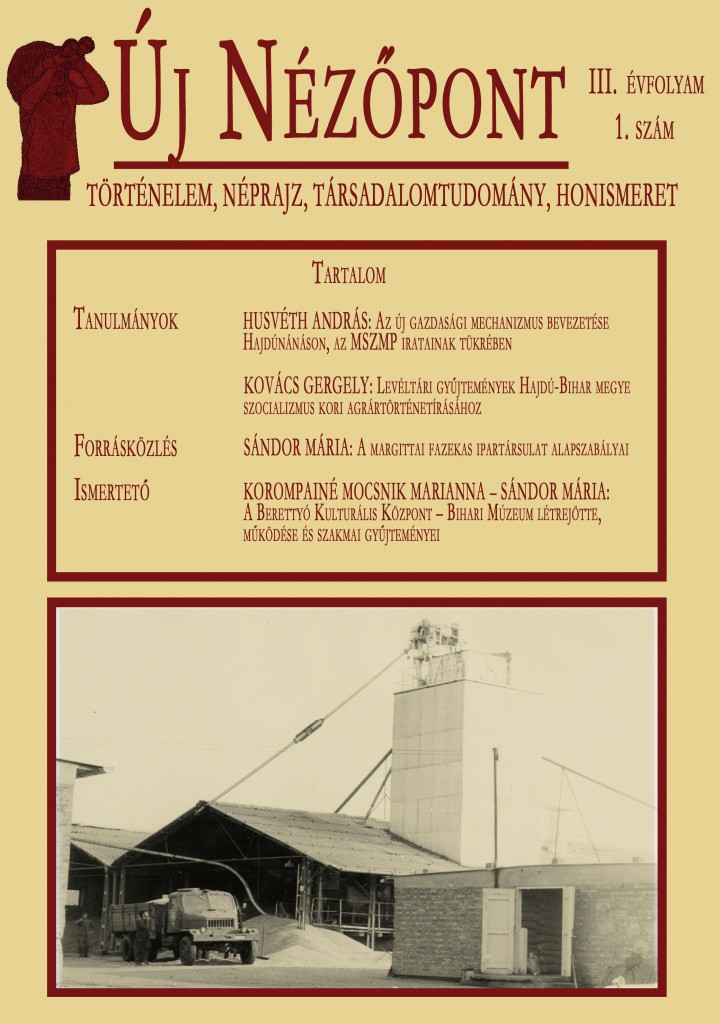
Az új gazdasági mechanizmus bevezetése Hajdúnánáson, az MSZMP iratainak tükrében
5-22Megtekintések száma:0The study examines through the example of Hajdúnánás, a plainsfolk agricultural-like town, that due to the political lessons of the 1956 revolution and the failure of the previous economic policy, the new economic management implemented a complex reform which was unique among the Soviet bloc countries: the New Economic Mechanism. The thesis also evaluates the role of the state party's local organization in the preparation and implementation of the program. The research shows that in Hajdúnánás, just like on the state level, the reforms mostly brought advancement. This made it fundamentally possible for the agriculture to become the success industry of the Kádár era, and for the city’s industrial factories to make a big step forward from the rigid system of plan directions to a business-like management. Although the New Economic Mechanism was finally blown, its effect left a significant mark on the economy of the Kádár era, and thanks to that Hungary became one of the most livable states in the socialist camp as „the happiest barrack”.PDF0 -
Levéltári gyűjtemények Hajdú-Bihar megye szocializmus kori agrártörténetírásához
23-39Megtekintések száma:1This study focuses on the local (county) archival sources of the cooperative farms of Hajdú-Bihar county, and examines the possibilities of how to use them, besides some basic questions of the socialist era’s public- and social history. Within this, the thesis intends to enumerate the essential sources for the collective farms- and post-World War II agriculture research by highlighting the importance and utilization practice of the archival writings and collections (data warehouse, archival reference library, and oral history resources).PDF0
Ismertető
-
A Berettyó Kulturális Központ – Bihari Múzeum létrejötte, működése és szakmai gyűjteményei
57-66Megtekintések száma:0The Bihar Museum in Berettyóújfalu is the Bihar area’s regional museum with four decades of history. It opened in the former residence of the Fényes family in October 1974. In 2001, it moved to the Main Square, into the first floor of the former village hall. From 1 February 2016, it has been the member institution of the newly formed Berettyó Cultural Center. The museum performs research and collection work on Bihar’s history, ethnography, folklore and literary history. The temporary exhibition hall organizes 4-6 exhibitions in a year, partly based on its own collection, and partly from the works of local artists, objects of collectors, and partly by presenting traveling exhibitions. It also carries out a wide-ranging public education task, and it has several decades history in museum educational work. The implementation of its programs are helped by non-governmental organizations, local enterpretours and volunteers. On the Museum of the Year national competition, it was rewarded twice (2004, 2011) with the ministerial special prize; and on the Museums’ 2015 Picnic, the institute was awarded with the „Museum of the Year 2014” honourable title.PDF0
Forrásközlések
-
A margittai fazekas ipartársulat alapszabályai
41-55Megtekintések száma:0In Margitta, Bihar County (now Marghita, Bihor, Romania), there has been a centuries-old history of pottery. According to the legislation, the pottery association was formed in 1874. Its charter is described in the current study. The document lays down the rules of the organization, which – among others – refer to entry and exit, and clarify the rights and duties of the members, define the operation and organizational structure of the association and the to-dos in the event of termination or fusion with another corporation.PDF0
Adatbázis logók




Lapszámok éves bontásban
2026