
Évf. 6 szám 1 (2019)
Megjelent
május 31, 2019
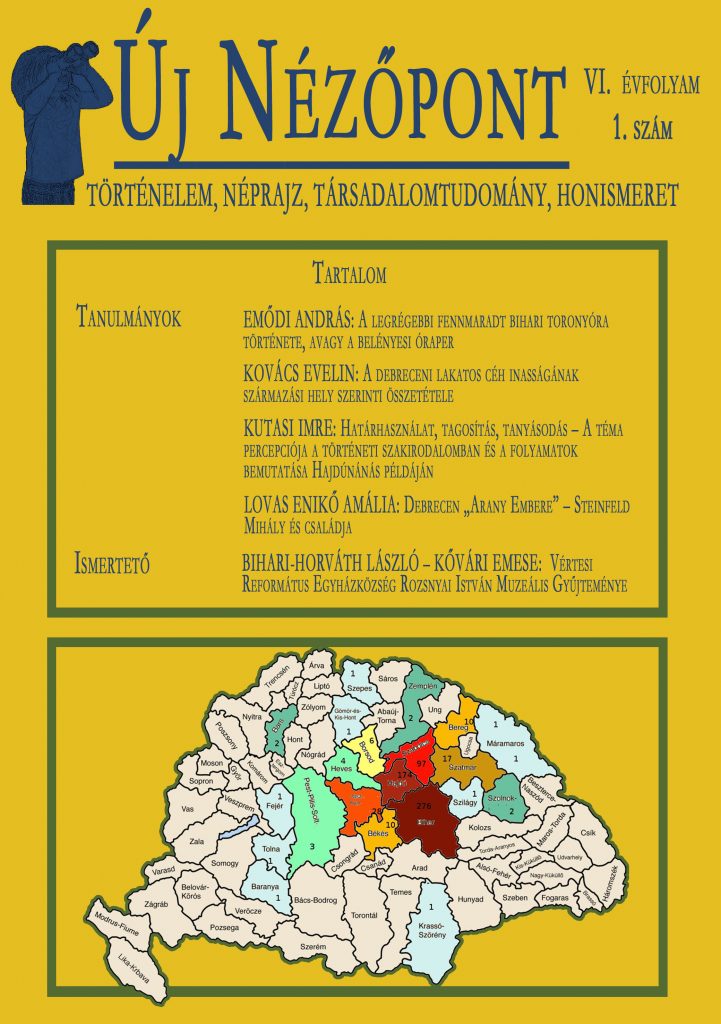
##issue.tableOfContents##
Tanulmányok
-
A legrégebbi fennmaradt bihari toronyóra története, avagy a belényesi óraper
5-23Megtekintések száma:0The paper discusses the history of the oldest surviving church tower clock of Bihar county. Installed in 1757, the clockwork is one of the earliest products of the Aszalai workshop of Debrecen. The specialty of its history stands in the fact that it used to be the subject of a decade of controversy, even law suit, surrounding the conflicts related to its repairs and maintenance between the Roman Catholic parish and the Calvinist-dominant city administration.PDF0 -
A debreceni lakatos céh inasságának származási hely szerinti összetétele
24-58Megtekintések száma:0In my study, I examine the distribution by places of origin of the locksmith apprentices joining the guild in Debrecen at the end of the 18th and during the 19th century. The basis of the analysis was the register of the locksmith guild of Debrecen as included in the Hajdú-Bihar County Archives of the Hungarian National Archives, which also contains the contract entries of the apprentices. I have been able to identify the place of origin of nearly 1,100 apprentices between 1780 and 1884, so I have been able to include 92% of the apprentices recorded by the scrivener. Apprentices arrived to Debrecen from 143 settlements, mostly from the villages and market towns of Bihar County. To find out more about the multiplicity of origin composition, I searched for answersto the following questions: Could the rural masters belonging to the Debrecen guild hire apprentices?; Which counties did the apprentices arrive to Debrecen and in what amounts?; Did more apprentices come from rural towns or villages?; Does the agglomeration designated by the places of origin of the apprenticescover the 19th-century market area of Debrecen?PDF0 -
Határhasználat, tagosítás, tanyásodás – A téma percepciója a történeti szakirodalomban és a folyamatok bemutatása Hajdúnánás példáján
59-81Megtekintések száma:0The aim of my paper is to examine the origin and the using of lands during the 19th and 20th centuries. Moreover, focusing on the evolution of farm-steads. In this study, I apply and refer to many previous works of this research area. Furthermore, I supply the study with using maps, statistical data, and historical sources. Extensive animal breeding was determining until the middle of the 19th century, then agriculture became more significant in the second half of that century. To sum up, we could monitor the evolution of the farm-steads from the late 19th century, because it became more important in that given period. However, there is no accepted explanation to expound this phenomenon, and for that very reason, we should concentrate on analysing that topic. -
Debrecen „Arany Embere” – Steinfeld Mihály és családja
82-113Megtekintések száma:0The life of the Steinfeld family is an excellent illustration of the modern history of Debrecen and Hungary on the personal level of the individual. The authentically detectable life paths of five generations of the family from Hebrew aristocracy strivingfor assimilation, and the merits won via their activities that affected the lives of many people have been unduly forgotten in the midst of history and the storms of society.The persistent intentions of family members for social acceptance and recognition according to their merits, and ultimately, the seeming success of all of these, is a reflection of the constant volatility of Belle Époque and the 20th century extremes.PDF0
Ismertető
-
Vértesi Református Egyházközség Rozsnyai István Muzeális Gyűjteménye
114-122Megtekintések száma:0PDF0
Hírek
Adatbázis logók




Lapszámok éves bontásban
2026