
Évf. 12 szám 3 (2025)
Megjelent
december 16, 2025
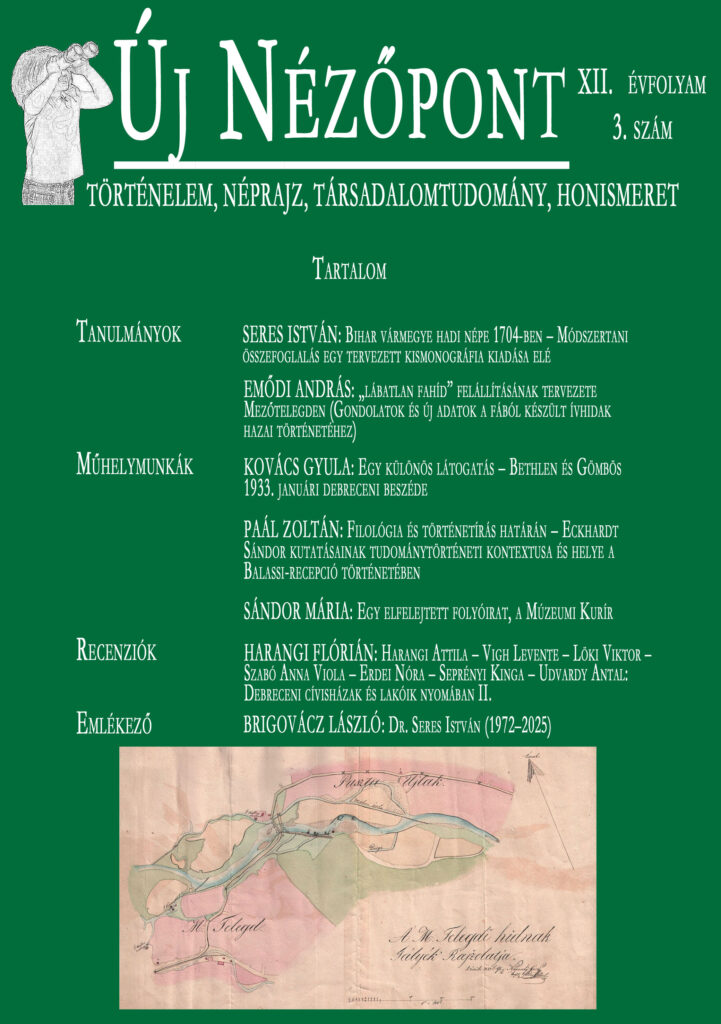
##issue.tableOfContents##
Tanulmányok
-
Bihar vármegye hadi népe 1704-ben – Módszertani összefoglalás egy tervezett kismonográfia kiadása elé
5-19Megtekintések száma:0A posztomusz tanulmány nem tartalmaz rezümétPDF0 -
„lábatlan fahíd” felállításának tervezete Mezőtelegden (Gondolatok és új adatok a fából készült ívhidak hazai történetéhez)
20-46Megtekintések száma:0In 1812, the need arose to build a new bridge on the main road leading from Nagyvárad to Transylvania, near Mezőtelegd. The construction of the structure crossing the Sebes-Körös River was postponed for years, and the plans for the wooden arch bridge, which was considered a novelty and a special feature at the time, were delayed due to the cumbersome approval process and uncertainties surrounding its feasibilityPDF0
Recenziók
Műhelymunkák
-
Egy különös látogatás – Bethlen és Gömbös 1933. januári debreceni beszéde
47-52Megtekintések száma:0Bethlen and Gömbös both gave speeches at the National Unity Party's event in Debrecen in January 1933. Although the two speeches did not mark a turning point in Hungarian domestic politics of the interwar era, they did indicate that the balance of power between the two men was shifting and that Gömbös's appointment as prime minister was not simply a change of government but a step towards changing the political system elaborated by Bethlen. Both men made moderate statements and expressed mutual support, but the present paper also aims to convey the transitory nature of this situation, as they became open enemies the following year.PDF0 -
Filológia és történetírás határán – Eckhardt Sándor kutatásainak tudománytörténeti kontextusa és helye a Balassi-recepció történetében
53-59Megtekintések száma:0The present paper focuses on Sándor Eckhardt's study on Balassi and Eckhardt's major works in this field, with particular emphasis on their significance in philology and literary history. It reviews Eckhardt's contribution to the textual criticism of Balassi's oeuvre and how he shed new light on the poet's work in the context of the Renaissance and Hungarian literary tradition. The analysis also touches on the methodological innovations that made Eckhardt's work a defining achievement in 20th-century Hungarian literary historiography. The present paper thus not only summarizes but also evaluates Sándor Eckhardt's role in the history of study on Balassi's poetryPDF0
Emlékező
Adatbázis logók




Lapszámok éves bontásban
2026