
Vol. 12 No. 1 (2025)
Published
April 24, 2025
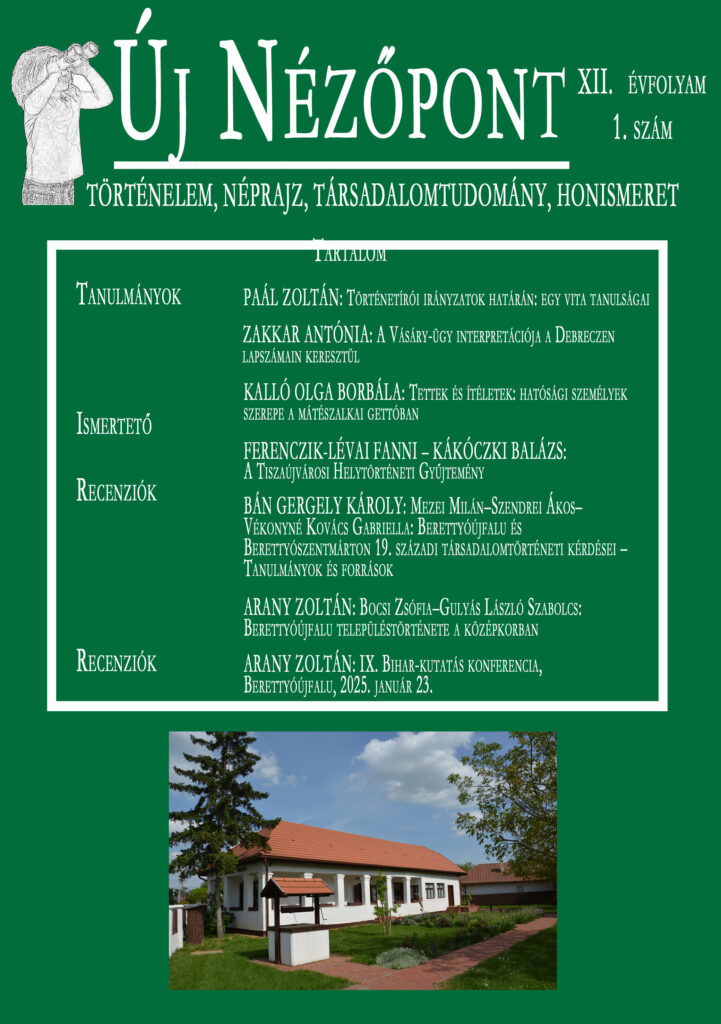
##issue.tableOfContents##
Research articles
-
Történetírói irányzatok határán: egy vita tanulságai
5-25Views:1We encounter debates and disagreements every day. From this perspective, interpreting a debate may not seem extraordinary, but perhaps the polemic between Sándor Eckhardt and Jenő Pintér is more complex than an everyday opposition. The purpose of this study is to reconstruct the ideological background of the debate and to highlight the opposing positions of the two scholars. From this approach, Sándor Eckhardt's and Jenő Pintér's interpretations of the relationship between positivism and the history of ideas can gain meaning. -
A Vásáry-ügy interpretációja a Debreczen lapszámain keresztül
26-40Views:0This study analyses the legal case of István Vásáry, the mayor of Debrecen, which took place between 1934 and 1935. The research focuses on the political attacks initiated against him, the attempts by radical right-wing groups to discredit him, and investigations related to the ownership issues of the Vásáry family. The accusations triggered immense media response, with the conservative-oriented daily newspaper ‘Debreczen’, which acted as Vásáry’s main supporter, coming to his defense and emphasizing his integrity as mayor. The study examines the relevant issues of the ‘Debreczen’ newspaper, offering an opportunity to chronologically track the events occurring in the city, as well as to juxtapose various political viewpoints. Additionally, it includes a detailed examination of the collection of József Pálffy, the editor-in-chief of ‘Debreczen.’ The final part of the work concludes the Vásáry case, presenting the outcomes of the disciplinary investigation and the legal proceedings. -
Tettek és ítéletek: hatósági személyek szerepe a mátészalkai gettóban
41-53Views:0The aim of this study is to provide a comprehensive picture of the violent acts committed by authority figures in the Mátészalka ghetto through the personal experiences of survivors and the consequences of their actions. This examination is facilitated by the judgments made during the people's court cases against individuals such as police commander József Cseri, gendarmerie sergeant András Bernáth, and corporal Endre Papp, whose receptions in society were quite ambivalent due to the role of the Jewish community in the justice system
Recenziók
Ismertető
News
Database Logos




Issues by Year
2026