Évf. 11 szám 2 (2024): Táplálkozásmarketing
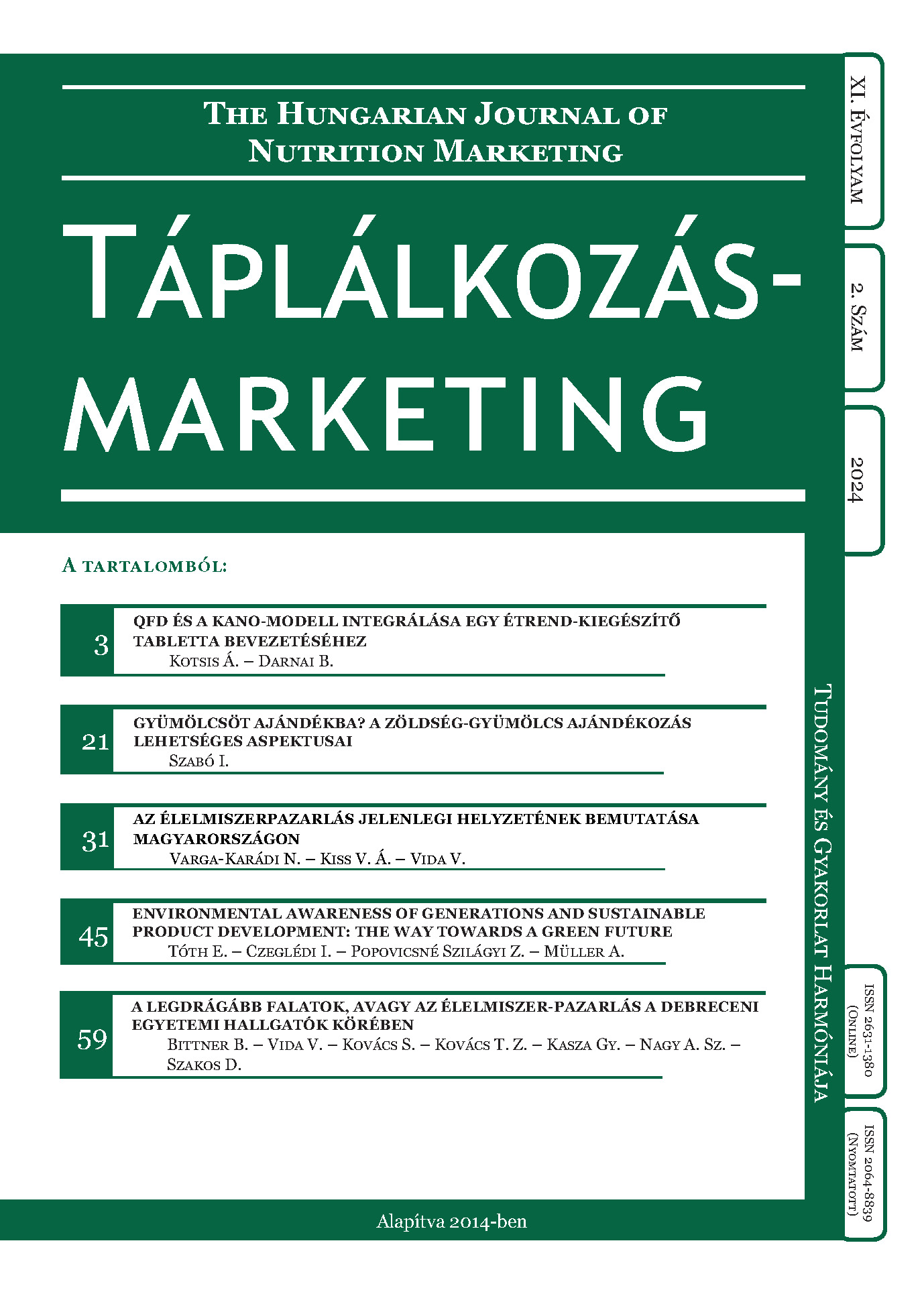
Teljes szám
issue.tableOfContents6a8dd28382362
Cikkek
-
QFD és a Kano-modell integrálása egy étrend-kiegészítő tabletta bevezetéséhez
3-18Megtekintések száma:376A minőség háza vagy QFD egy terméktervezési módszer, amely sok lépéses modellen keresztül segít összekapcsolni a vevői igényeket és a termék technikai paramétereit. A tervezés lényeges eleme, hogy meg kell határozni a vevői igények fontosságát, a termék versenytársakhoz viszonyított helyzetét, valamint a vevői igények és a technikai paraméterek kapcsolatát. E három tényező együttes elemzésével lehet meghatározni melyek a legfontosabb technikai paraméterek a fejlesztés során. Ennek a modellnek a Kano-modellel való integrálása, még pontosabb képet ad a fejlesztések irányáról. Ugyanis a vevői igények szerinti teljesítmény növekedés nem egyformán növeli a vevői elégedettséget. Ezeket a Kano-modell 5 csoportba sorolja: alapelvárások, teljesítmény jellemzők, vonzó jellemzők, semleges és hátrányos jellemzők. A Kano-modell QFD-ba való integrálásával pontosabb képet kaphatunk arról, hogy mely termékjellemzők fejlesztésére érdemes fókuszálni, ha az elérhető legmagasabb elégedettség növekedést szeretnénk elérni. Vizsgálatunkban egy bevezetés előtt álló étrendkiegészítő tabletta esetén mutatjuk be a két módszer együttes alkalmazásának lehetőségét. Mintánkban N=298 fő válaszait elemeztük, fogyasztási szokásaik alapján klasztereket alkottunk, amely klaszterekre külön QFD alkalmazásával vizsgáltuk, hogy a termék bevezetése során mire érdemes fókuszálni. Eredményeink szerint a célcsoportként azonosítható klaszterek számára vonzó tényezők a természetes összetevők, a Debreceni Egyetem tudományos háttere és a biztonságosság, amelyek közül az első kettő növeli a legnagyobb mértékben az elégedettséget. Ezért ezeknek a csomagoláson való feltüntetését is javasoljuk. A minőség háza elemzés alapján pedig a bioaktív összetevők lett a legfontosabb technikai paraméter, ezért ennek alkalmazása a gyártás során javasolt.
JEL-kódok: I12, L11 L66PDF239 -
Gyümölcsöt ajándékba? A zöldség-gyümölcs ajándékozás lehetséges aspektusai
21-29Megtekintések száma:315A zöldség-gyümölcs ajándékozás Magyarországon nem elterjedt szokás, miközben az egészséges életmód mindig jó hívószónak minősül. Míg külföldön már különleges zöldség- és gyümölcskosarakat kínálnak egyedi ajándéklehetőségeket, itthon a klasszikusnak számító könyv, csokoládé, virág, valamint a szolgáltatások és élmények nyújtása preferált. Néhány különleges gyümölcs akár milliós összegekért kell el a piacon, de vannak olcsóbb, mégis egyediséget magukban hordozó termékek is. Bár a zöldség-gyümölcs ajándékozásnak történelmi hagyományai vannak szerte a világban, napjainkban alábbhagyott az ajándék formájában történő értékesítésük. Pedig a környezet- és egészségtudatos, a zöld életstílusra nyitott, vagy csak kuriózumra vágyó fogyasztók reális célszegmensei lehetnének ennek a niche területnek, melyet megfelelő marketingstratégiával sikerre lehetne vinni.
JEL-kódok: I12, M31, Q13PDF201 -
Az élelmiszerpazarlás jelenlegi helyzetének bemutatása Magyarországon
31-42Megtekintések száma:757Kutatásunk korunk egyik globális problémájára, az élelmiszerpazarlásra összpontosít. Az élelmiszerpazarlásnak nemcsak gazdasági, hanem jelentős környezeti és társadalmi következményei is vannak. Célunk, hogy a vonatkozó számadatok tükrében rávilágítsunk a fenntartható élelmiszerfogyasztás és -termelés fontosságára, átfogó képet adjunk az élelmiszerpazarlás jelenlegi magyarországi helyzetéről, és kiindulópontként szolgáljunk más, a témához szorosan kapcsolódó hasonló kutatások számára. Ennek érdekében megvizsgáljuk a téma hátterét és a meglévő jó gyakorlatokat. A szakirodalmi adatokat megvizsgálva megállapítható, hogy jelentős mennyiségű élelmiszerhulladék keletkezik a háztartásokban, amely nagy valószínűséggel megelőzhető lenne. Összegyűjtöttük a jó gyakorlatokat, melyeket a cégek, vállalkozások indítottak az élelmiszerpazarlás csökkentésére. Érdemes lenne még inkább felhívni a háztartások figyelmét ezekre a pazarlás csökkentési lehetőségekre, az élelmiszerhulladék alternatív felhasználási lehetőségeire, a komposztálásra. ennek megvalósítására egy célzott, marketingkampány lenne a leginkább alkalmas, amely segíthetné a lakosság ismereteinek bővítését a témában.
JEL-kód: Q56PDF892 -
Generációk környezetvédelmi tudatossága és fenntartható termékfejlesztés: A zöld jövő felé vezető út
45-57Megtekintések száma:561A környezetvédelem korunk egyik legfontosabb kihívása, amely a növekvő népesség és fogyasztás következtében egyre sürgetőbbé válik. Ez a tanulmány különböző generációk, különösen a Z generáció környezeti tudatosságát vizsgálja, és kiemeli a nemek közötti különbségeket. Az online kérdőíves kutatás során 427 fő Észak-alföldi régióban élő válaszadó véleményét elemeztük, közülük 367-en tartoztak a Z generációhoz (148 férfi, 219 nő), és 57-en az X és Y generációhoz. A tanulmány a Z generáció klímaváltozás mérséklésével kapcsolatos tevékenységekhez való hozzáállását is vizsgálta, nemek és generációk közötti összehasonlítással. A szelektív hulladékgyűjtést (átlag=4,37), az élelmiszer-pazarlás elkerülését (átlag=4,21) és a tudatos energiahasználatot (átlag=4,17) a Z generáció rangsorolta a legfontosabbként egy 1-től 5 ig terjedő Likert skálán (1= egyáltalán nem fontos, 5= teljes mértékben fontos). A nők szignifikánsan magasabbra értékelték a környezettudatos tevékenységeket, mint például az újrahasznosított papír használatát és a kevesebb csomagolást igénylő termékek választását, mint a férfiak (p≤0,05). Az összehasonlító elemzés kimutatta, hogy az X és Y generáció szinte minden klímavédelmi tevékenységet fontosabbnak tart, mint a Z generáció (p≤0,05), ami valószínűleg az energiatakarékossági megoldásokkal kapcsolatos magasabb szintű ismereteknek köszönhető. Az oktatás és a családi környezet kiemelt szerepet játszik a környezeti értékek kialakításában. Generációs különbségek ellenére a Z generáció is prioritásként kezeli a hulladékcsökkentést, és vásárlási döntéseikben figyelembe veszik a klímavédelmi szempontokat. A tanulmány bemutatja egy fenntartható üdítőital kifejlesztését is, amely figyelembe veszi a környezeti szempontokat, és innovatív csomagolási megoldást kínál a hulladék minimalizálása érdekében.
JEL kód: Q01PDF407 -
A legdrágább falatok, avagy az élelmiszer-pazarlás a debreceni egyetemi hallgatók körében
59-75Megtekintések száma:435Az élelmiszer-pazarlás mértéke, jelentősége és következményei sokat vizsgált téma, mivel nagyban hozzájárul az erőforrások pazarlásához és a környezeti károkhoz. A Debreceni Egyetem kutatása arra irányult, hogy feltárja az élelmiszer-pazarlás mögött húzódó tényezőket, különös tekintettel az egyetemi hallgatók szokásaira. Míg az élelmiszer-pazarlás általános mértéke világszerte jól dokumentált, az egyes népességcsoportokra, például az egyetemi hallgatókra vonatkozó kutatások csak a közelmúltban kaptak figyelmet. Az egyetemi hallgatók egyedülálló demográfiai csoportot képviselnek sajátos életritmusuk, korlátozott anyagi lehetőségeik és alaposabb ismereteik miatt. Az élelmiszerfogyasztási és pazarlási szokások közötti különbségeket célzottan kell tanulmányozni. A kutatás keretében 2023/2024-es tanévben a Debreceni Egyetem hallgatói körében készült felmérés az élelmiszer-pazarlással kapcsolatos ismereteik és szokásaik megismerése céljából. A vizsgálat célja, hogy rávilágítson a pazarlás csökkentésének lehetőségeire, valamint hozzájáruljon a fenntarthatóbb fogyasztási minták kialakításához. A felmérés kérdőíves adatgyűjtésen alapult, kitöltése önkéntes volt, és 133 kérdést tartalmazott több kérdéscsoportban. Az adattisztítás után 618 hallgató válaszai alapján készült el jelen tanulmány a SPSS 29.0 program segítségével. Varianciaanalízist (ANOVA - Analysis of variance) és t-próbát végeztünk és Chi-négyzet próbát alkalmaztunk 5%-os szignifikanciaszint mellett. K-means klaszterezési algoritmussal a válaszadók csoportosítására került sor az általuk becsült, kilogrammban kifejezett egyéni, valamint a háztartásuk, vagy országos átlagos élelmiszer-hulladék alapján. E mellett PCA (Principal Component Analysis, főkomponens analízis) elemzést alkalmaztunk. A nemek között szignifkáns különbség volt, a nők jellemzően kevesebb élelmiszert pazaroltak, mint a férfiak, a jövedelmi csoportok között nem volt különbség a pazarlást illetően, azonban az attitűdök alapján kialakított főkomponensek esetében volt, a szerényebb jövedelmi helyzetűek jellemzően pénzügyileg tudatosabbak, míg az átlag feletti jövedelműekre kevésbé volt jellemző a tervezés, a környezetvédelem jellemzőbb volt rájuk. A végzettséget tekintve szintén szignifikáns különbség mutatkozott, az alacsonyabb végzettségűek fogékonyabbak a kedvezményekre, a magasabb végzettségűek pedig a környezetvédő főkomponensben értek el magasabb pontátlagot.
JEL-kódok: D12, Q18, Q 53, Q56PDF356