Search
Search Results
-
Investigation of the milk composition of three Tsigai sheep varieties, and the detection of cazein fractions of sheep milk by Reversed-Phase HPLC
13-22Views:217The measurements started in 2005, the author used the milk of 3 types of Tsigai Sheep that are suitable for milking, they examined the milk composition, the possible differences between the milk types, the coagulation characteristics, cheese processing, yielding characteristics and the transfer of solid content into cheese. From the large number of measurements, the results of milk composition examinations are described.
During the research the author examined the milk coagulation property of three types of Tsigai Sheep QTS 25 is a substance investigating instrument, and its primary mission is the analysis of the substance profile. The advantage of this instrument is the representation of the survey graphs from which the part of the substance characteristics could be directly read off. By the help of the applied mathematical and statistical operations we tried to establish connection between the congealment-hardness and the specialty of the different types of Tsigai Sheep.
In 2006 the author began the identification and qualification of the major sheep milk proteins by RP- HPLC method. She used a scientific article written by Bordin et al. The method is able to separate and quantify the seven major proteins. However Bordin’s procedure was developed using bovine milk, the author adapted it to sheep milk. -
Results of the sensory analysis of precision maize production
59-62Views:579This research was carried out in 2018, at the Látókép Experimental Station of the University of Debrecen in a moderately warm and dry production area, on deep humus layered medium-hard calcareous chernozem soil. In the scope of the research, the chlorophyll content of maize (Zea mays L.) was examined under field circumstances by means of local sensory measurements and we were looking for correlation between the obtained values and the amount of yield. Our measurements were carried out with Minolta SPAD-502 and GreenSeeker devices at 3 measurement times (4 leaf stage, 10 leaf stage and silking). It was found that phenological phases had an effect on the obtained SPAD and NDVI values and were in a slightly significant correlation with the yield. The most significant correlation was found between the results obtained during silking and the amount of yield. This may be because the least time has passed between the measurement time and harvest. Results obtained during the 10-leaf stage show excessive values in each case, which can be due to a measurement error. It was found that the phenological phase had an effect on the correlation of SPAD and NDVI values and the amount of yield. As the phenological phase progressed, the correlation between the measured results and yield has increased.
-
Integrated development strategy of the catchment area of the Tisza river
31-36Views:279The main challenge for mankind has always been to eliminate the borders of its living space, as well as to explore and discover its new faces. Contemporary literature strengthens this postulate. It is the preference of the experts of various fields in spatial analysis is to consider space to be repairable, changeable and organisable. In accordance with this axiom, the five affected countries in the catchment area of the Tisza river (Hungary, Romania, Ukraine, Slovakia and Serbia) worked out an integrated, mutual standpoint to support the problems of the catchment area and to exploit its opportunities with the aim to support transnational cooperation. They laid great emphasis on the existing resources which could become the driving force behind regional development directions. This study contains the summarised outcomes of the TICAD project (SEE/A 638/4.2./X) which was drawn up as a result of cooperation between renowned institutions of the five affected countries within the South East Europe Transnational Cooperation Programme (lead partner: VÁTI, Hungary).
-
New wonder of an old hormone: Hungarian sour cherry varieties as natural melatonin sources
65-72Views:409Agriculture has always been an important role in economy, food supplies, sustainability of society During our experimental work an effective extraction procedure has been developed for melatonin. Further chromatography was developed the quantitative and qualitative determination of melatonin. A compound that was equal to the standard was purified from the extract by preparative HPLC technique and the structure of the purified sample was confirmed by MALDI-TOF-MS and NMR analysis. Based on our measurements, harvested in the state of biological maturity Hungarian sour cherry cultivars contain high levels of melatonin.
Our results show that "VN4" variety has extremely high melatonin content, 9.893 ug g-1 and suggest that "VN4" which were selected from the "Bosnyák" varieties is melatonin accumulating. The average value of the melatonin content of Hungarian sour cherry cultivars is 2.319 ug g-1.
-
Evaluation of the relationship between main type traits and longevity in Hungarian Simmental cows
205-209Views:429The Hungarian Simmental cattle is a dual-purpose breed, having good milk and meat production characteristics. Simmental cows have some other important traits, for example, a longer productive life. The longevity or productive life is the time period between first calving and culling. The conformation contributes to productive life, reproduction, and milk production.
The aims of this study were to analyze the longevity of Hungarian Simmental dual-purpose cows, to evaluate the effects of the size of the herd, age at first calving, main type traits (frame, musculature, feet and legs, mammary system), and combination of main type traits (frame and musculature, feet and legs and mammary system).
Animal, age at first calving, herd*calving, musculature, the mammary system as well as the combination of mammary system and feet and legs were significant effects on longevity. The highest risk ratio was observed for cows first calved after 31 months. The risk of culling increased with increasing scores of musculature and decreasing scores of the mammary system. The highest risk ratio was estimated in category 11 (lower scores of mammary system with lower scores of feet and legs). In this case, the risk ratio was 36% higher than the reference group.
-
Usage of Different Spectral Bands in Agricultural Environmental Protection
123-126Views:215Hyper and multispectral imaging systems are widely used in agricultural and environmental protection. Remote sensing techniques are suitable for evaluating environmental protection hazarsd, as well as for agriculture resource exploration. In our research we compared aerial hyper and multispectral images, as well as multispectral digital camera images with the background data from the test site. Hyperspectral records were obtained using a new 80-channeled aerial spectrometer (Digital Airborne Imaging Spectrometer /DAIS 7915/. We have chosen two farms where intensive crop cultivation takes place, as test sites, so soil degradation and spreading of weeds can be intensive as a result of land use and irrigation. We took additional images of air and ground with a TETRACAM ADC wide band multispectral camera, which can sense blue, green and near infrared bands. We had detailed GIS database about the test site. Weed and vegetation map of the area in the spring and the summer was made in 2002. For soil salt content analysis, we gathered detailed data frome an 80x100 m area. When analyzing the images, we evaluated image reliability, and the connection between the bands and the soil type, pH and salt content, and weed mapping. In the case of hyperspectral images, our aim was to choose and analyze the appropriate band combinations. With a TETRACAM ADC camera, we made images at different times, and we calculated canopy, NDVI and SAVI indexes. Using the background data mentioned above, the aim of our study was to develop a spectral library, which can be used to analyze the environmental effects of agricultural land use.
-
Usage of different remote sensing data in land use and vegetation monitoring
7-12Views:346The use of remote sensing in forest management and agriculture is becoming more prominent. The rapid development of technology allowed the emergence of database suitable for precision application in addition to the previously used low-resolution and low data content images. The high resolution, hyperspectral images are not only suitable for separating the different land use categories and vegetation types but also for examining the soil characteristics and biophysical features of plants (Blackburn and Steel, 1999; Condit, 1970). We processed a multispectral satellite image (Landsat 7 ETM+) and a hypespectral areal image (DAIS 7915) about a farm on the plains and evaluated the different image classification methods. During our examinations, we examined the geometrical and radiometrical characteristics of images first, then assigning the training areas, we determined the spectral characteristics of land use categories. We performed a multispectral analysis for checking land use, where we compared controlled and uncontrolled classification systems to check their reliability. We used areal and spectral reductions to make the classifications more accurate and to reduce the length of calculations.
-
Assay of runoff conditions using a Digital Elevation Model
124-129Views:477We can get information about water conditions of plane areas by analyzing their relief. By using the Digital Elevation Model, we can get proper information about runoff conditions in the terrain surface, which is the basis for ponding analysis. In our study, a Digital Elevation Model of the sample plot in Hajdúsági-löszhát (loess ridge) was created that makes possible the determination of runoff conditions of the surface. Convergence and divergence of runoff direction showed the rate of ponding and the location of possible inland-water spots. By using this model, concrete location of those areas that tend to be overmoistured could be determined. Knowledge of this phenomenon can be an effective instrument for farmers in optimizing crop growing, and additionally in performing water management interventions in proper time and space.
-
Comparative analysis of physiologically important fatty acids
71-76Views:493Fatty acid composition of some vegetable oils, like wheat germ, walnut, peanut, hempseed, linseed, sunflower-seed, olive, rapeseed, grape seed or pumpkin seed, analysed at Food Science Institute of Debrecen University, are summarised here. The effect of heat treatments usually used in Hungarian cuisine was examined in this paper.The influence of different fatty acids on human health is also reviewed.
-
Study of some physiologic properties of different genotype sweet corn hybrids
105-110Views:231The effect of nutrient-supply (control, N120+PK) and two different genotypes on the physiologic properties of sweet corn has been investigated in the crop-year of 2011 on chernozem soil in the Hajdúság region. The experiments were carried out at the Experimental Station of the University of Debrecen in Debrecen-Látókép. The experiment was sewn in two different sowing times: the 21st April can be considered as an early, while the 19th May as a late sowing time. The two involved hybrids were Jumbo and Enterprise. The applied plant density was 65 000 plants per hectare.
Our aim with this experiment was to study the plant production, just as the main affecting factors of its development and dynamics, like nutrient-supply and genotypes. We aimed to study and analyse the relationships between these factors and plant production. In this study following parameters were measured and calculated: photosynthetic activity, chlorophyll-content (SPAD-value), leaf area index (LAI) and leaf area duration (LAD). Regarding the analysis of photosynthetic activity values no obvious relationship between the measured values and the applied hybrids, just as nutrient-supply has been revealed.
Analysing the SPAD-values it can be stated that the chlorophyll-content of the measured leaves showed an increasing tendency due to the nutrient-supply. The highest values have been measured in the intensive cob development phase of the early sowing time plots.
Regarding the LAI-values we have found significant differences between the fertilizer treatments in both sowing time treatments. In case of the leaf area duration values – that is derived from the LAI values – nutrient-supply has positively affected the duration of the assimilation area. -
The significance of biological bases in maize production
61-65Views:311The comparative trial has been set up in the Demonstration Garden of the Institute of Crop Sciences of the University of Debrecen, Centre for Agricultural and Applied Economic Studies, Faculty of Agricultural and Food Sciences and Environmental Management in 2012, with 24 hybrids with different genetic characteristics and growing periods. The soil of the trial is lime-coated chernozem, with a humus layer of 50–70 cm.
The weather of the trial year was quite droughty; the monthly average temperature was 3–4 oC higher than the average of 30 years. High temperature, together with lack of precipitation occurred during the most sensitive phenophases of maize (flowering; fecundation, grain saturation).
The following characteristics have been observed: starting vigour, date of male and female flowering, plant and cob height, dry-down dynamics during maturation and the change of yield composing elements has also been quantified. The yield was recalculated to 14% moisture content grain yield after harvesting.
The beginning of the growing period was advantageous, therefore the analysed hybrids could grow a high (above 300 cm) and strong stem. The yield of the hybrids changed between 10.33 and 11.87 t ha-1, but as a result of the unfavourable climatic extremes, their genetic yield potential prevailed only at a rate of 30–40%. However, moisture content by the time of harvesting was good despite its early date (12th September); it remained under below 14% in most cases. Dry-down was measured on a weekly basis between 14th August and 5th September.
The analysis of the qualitative parameters of the maize hybrids (protein %, oil % and starch %) resulted in significant differences. The most significant difference has been observed in the case of protein content (LSD5%=2.01). Oil content was the most advantageous in the case of hybrids belonging to the mid-late growing group (FAO 400). The X9N655 and 36V74 hybrids had the highest oil content (around 4%), while hybrids P9915 and 37F73 had significantly lower oil content. Starch content was above 70% in the case of every hybrid.
Hybrid selection is highly important in terms of yield and yield security of maize, as well as the application of modern biological fundamentals and hybrid specific technology for the improvement of the level of cultivation technology.
-
Fractionation of chicken egg proteome by isoelectric point in liquid phase
39-42Views:638The application of proteomics is relevant to physiology, reproduction, immunology, muscle and lactational biology in animal science, altough its use is still limited. One of the greatest challenges of proteome analysis is the reproducible fractionation of the complex protein mixtures. The fractionation methods can increase the probability of biomarker protein discovery. The fractionation by liquid-phase isoelectric focusing is one of the prefractionation methods. As a result, protein fractions can be easily collected, pooled and refractionated. There is a lack in the knowledge of gel-based proteomic methods of egg as only a limited number of protocols can be found in the literature, thus sample purification and fractionation require a time consuming optimisation procedure. The aim of this study was to fractionate egg yolk and white proteins by isoelectric point in liquid phase.
-
Assessment of electrical conductivity and germinability of groundnut genotype seeds
5-10Views:596Seed quality affects crop establishment and productivity. In addition, the use of good-quality seed is an essential prerequisite for sustainable crop production including groundnuts. Assessing germinability and electrical conductivity provides early evidence of the production potential of a given crop variety or genotype. Therefore, this study assessed the germinability and electrical conductivity of seeds of three groundnut genotypes. A laboratory experiment arranged in a Completely Randomized Design (CRD), replicated three times, was conducted at the Faculty of Agriculture, Kyambogo University, in 2020. Seeds of Igola, Serenut 1, and Serenut 2 groundnut varieties were tested, and data was collected on germination percentage and electrical conductivity. Analysis of variance (ANOVA) was performed using GenStat and means were separated using the least significant difference test at a 5% probability level. Germination percentage and electrical conductivity significantly (p<0.05) differed among the groundnut varieties, with Igola recording the highest germination percentage, followed by Serenut 1, and the lowest was in Serenut 2. The highest electrical conductivity was recorded in Serenut 1 and the lowest in Igola. Since Igola had one of the lowest electrical conductivity and the highest germination percentage, it was concluded that Igola genotype retained higher quality attributes.
-
Climatic water balance in Hamelmalo, Eritrea
69-76Views:469Agricultural production is an important sector for peoples to live, but it is highly affected by climate change. To have a good production we need to understand the climatic parameters which adversely affect production. Hamelmalo, which is located in the semi-arid area of Eritrea, is vulnerable to climate change and this is realised in the total production loss. Nevertheless, there is no concrete reference about the climate of the region due to lack of data for a long time. Changes in precipitation (P), evapotranspiration (ET) and, implicitly, in the climatic water balance (CWB), are imminent effects of climate change. However, changes in the CWB, as a response to changes in P and ET, have not yet been analysed thoroughly enough in many parts of the world, including Eritrea. This study also explores the changes of the CWB in the Hamelmalo region, based on a wide range of climatic data (P, relative air humidity and evaporation pan necessary for computing potential evapotranspiration (PET) with the pan evaporation method) recorded at Hamelmalo from 2015-2019. This analysis shows that the annual cumulative CWB for Hamelmalo is negative in 67% of the years. The dry season without precipitation leads to negative CWB and the change in CWB only starts from the raining or crop season. Based on this recent study, 2015 had the highest PET and lowest P, and this resulted in the lowest CWB in the investigated period. Opposite to this, 2019 had lower PET and highest P, which led to the highest CWB. However, the monthly values of CWB did not correlate with the annual P or ET. On the base of our study, it can be concluded that PET and P were very variable in the investigated years and P was the most influential elements of CWB.
-
Dimensionality Expressed by Caseendings and Spatial Prepositions
7-15Views:212The purpose of this essay is to investigate some of the uses of English prepositions and Hungarian case endings employed to express spatial relations. The observation of invariant mistakes Hungarian native speakers learning English make initiated the investigation. The questions raised are: (a) where do the two systems match and where do mismatches lie, (b) how do language users perceive the world, and (c) do speakers observe spatial relations as two-dimensional or three-dimensional cognitive models? Do different languages see the same thing as either three-dimensional, or two-dimensional?
Abondolo (1988) gives an adequate morphological analysis of ten Hungarian case-endings (inessive, illative, elative, superessive, delative, sublative adessive, ablative, allative and terminative) used in spatial reference, which give a closed set in references made to factors, such as (1) location which can be broken down as interior vs. exterior location with the latter being further analysable as superficial and proximal, and (2) orientation which can be analysed as zero orientation (position), source and goal. In addition to those in this list, two other case endings (genetive/dative and locative) are also used for expressing spatial relations but the last is only a variant of the inessive and superessive case-endings and is only used with place-names. The set is closed in the sense that the same item is meant to refer to the same sort of spatial relation in every case. Language textbooks, c.f. Benkő (1972) seem to suggest a neat match between the above Hungarian case endings and their English prepositional counterparts, e.g. London-ban (inessive) = in London.
The picture, however, is far from being so clear-cut. The data, which were taken from various dictionaries and textbooks, show that the choices of both the prepositions and the case endings listed above depend on how the speaker considers factors (1) and (2) and that proximity is very important. Instead of a one-to-one match between the prepositions and the case endings, we rather find that the above case endings will match a dual, and in some cases a tripartite system of prepositions with the correspondences found in the two languages, which yield the following chart: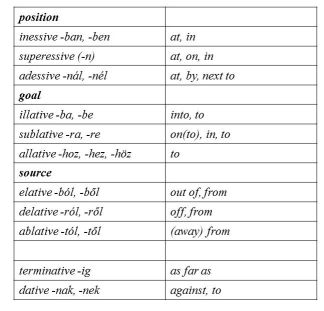
We suggest that languages may view or map the same physical entities in different ways, for example along surface vs. volume or goal vs. passage, etc.
Furthermore, we also find it possible that it is the language specific, inherent coding of the nominal phrase that decides – in many cases – upon the choice of prepositions and case endings. -
Influence of Hydrological Parameters on the Biodiversity of the BerettyóRiver I.
215-229Views:399The DIRECTIVE 2000/60/EC OF THE EUROPEAN PARLIAMENT AND OF THE COUNCIL orders the measurement of the state of natural and artifical waters. We therefore applied environmental qualification methods, which allow inductions of the searched area in environmental management, conservation and water quality protection points of view. These methods are accepted in interdisciplinary sciences, and are in use in Hungarian and international practice. We applied the range data measured along the Berettyó River, and ratified by the remote sensing, to count hydrological-hydraulical attributes of the stream, by the framework of the Hec-Ras programme. We processed the physical, chemical and biochemical water qualifications, determined the MMCP-index (the point-system of the Hungarian macrozoobenthos taxons), and estimated the Spencer index-numbers, which were based on complex environmental qualification and bioindication. Appointed, that the different results of researches are not inconsistent. This results together the spatial analysis reveal the natural and anthroponetic specialities of the river and the landscape, which determine the environmental flavours and biodiversity. The bioindicators represent better environmental status, than the physical, chemical and biochemical parameters. The natural conservationist importance of drainage canal network of Bihari-Plain is appreciated by these facts.
-
Heat treatment and microbial digestion of poulty feather for biogas production
215-219Views:427The aim of this research was the elaboration of the technological parameters of heat pre-treatment and microbial digestion of poultry feathers for biogas production. Feathers were treated at 70, 100, 140 °C, and subsequently digested by Bacillus licheniformis, or keratin disintegrator bacteria. Investigations focused on the optimalization of parameters influencing poultry feather biodegradation. The optimal range of pH, temperature,
feather size and bacillus:feather ratio were determined in the experiments, as well as the analysis of relationship between the examined parameters. In order to be able to track the dynamics of the biodegradation, we determined the extinction level of the liquid phase of the biodegraded material in the different experimental treatments. The results showed that the rate of hydrolysis was significantly higher in the treatments with bacteria than in the treatments without it. Regarding the pretreatments at 70, 100 and 140 °C, the digestion of feather was the most intensive at 70 °C. The most extensive digestion was observed in case of 1:3 feather:water ratio. The highest intensity of feather digestion was
detected in the treatment with 1% microbe ratio. -
The application of bentonite and zeolite for soil amelioration in acidic sandy soil
131-137Views:345In a pot experiment, we have studied the effect of bentonite and zeolite in different dosages [control; 5; 10; 15; 20 g kg-1] on acidic (pHH2O=5.65) humus sandy soil. The experiment was set up in 2007 and 2008 in the greenhouse of the UD CASE Department of Agrochemistry and Soil Science. As a test plant, perennial ryegrass (Lolium perenne L.) was used.
In laboratory examinations, pH(H2O), pH(KCl), hidrolytic acidity, nitrate-N content, readily available phosphorus and potassium content were determined. Among soil microbial parameters, the total number of bacteria, the cellulose-decomposing bacteria, the carbon-dioxide production, the microbial biomass-C content of soil, and the saccharase enzyme activity were measured. In the experiment the biomass of the test plant was determined.
The effect of bentonite and zeolite in different dosages can be summarized as follows:
− The pH increased under the effect of low dosages. With the increasing of the pH the hydrolytic acidity - at the bentonite treatments significantly – decreased.
− Regarding the readily available nutrient content of the soil, low and medium dosages proved to be effective. High dosages of bentonite treatments reduced the nitrate-N content, the readily available phosphorus, and potassium content of soil, by zeolite treatments the high dosages reduced the nitrate-N content of soil.
− Regarding the measured soil microbial parameters in both treatments low and medium dosages proved to be also effective, but the high dosages didn’t cause decreasing at the total number of bacteria, and by zeolite treatments the biomass-C content of soil.
− Also the bentonite and zeolite treatments enlarged the biomass of the test plant. We experienced significant increasing by bentonite treatments by the effect of medium and high dosages, while in zeolite treatments only the high dosage caused significantly increasing in plant biomass. The largest dosages decrease the plant biomass.
− Under the statistical analysis we found many medium and tight correlation between the studied parameters. -
Molybdenum - accumulation dynamics of cereals on calcareous chernozem soil
81-85Views:607This work is about the molybdenum-accumulation of cereals analyzing soil and plant samples from a field experiment set in
Nagyhörcsök by Kádár et al. in 1991.
In this long-term field experiment different levels of soil contamination conditions are simulated. Soil and plant samples were collected
from the experiment station to study the behaviour of molybdenum.
In this report results of maize, winter wheat, winter barley and soil analysis are presented. The conclusions are as follows:
– Analysing soil samples from 1991 we have found that roughly half of the molybdenum dose applied is in the form of NH4-acetate+EDTA soluble
– Comparing element content of grain and leaf samples we have experienced that molybdenum accumulation is more considerable in the vegetative plant parts
– Winter wheat accumulated less molybdenum then maize in its vegetative parts. Comparing molybdenum content of winter wheat to winter barley we found that the concentration of the element in wheat was lower by half than in the winter barley. It seemed that molybdenum accumulated to the least degree in winter wheat. -
The social basis of regional development in the North Great Plain Region
57-65Views:651It is a widely accepted practice in the European Union to break down countries into regions according to their stage of development, their cultural and economic characteristics. The basis of this methodology is the EU-conform MOTS system, which distinguishes territorial units on five levels. Besides the MOTS system, Hungary uses another system, too, which is the basis of our public administration, and whose roots go back to the times of King Saint Stephen: the county system. In Hungary, developmental decisions are taken by a county’s general assembly; at the same time, from an economic point of view the characteristics and competitive advantages of a county can be defined more precisely than those of a region.
Szabolcs-Szatmár-Bereg County and Hajdu-Bihaur County may be described with completely different characteristics, albeit both of them are part of the North Great Plain Region. On a county level economically important and justified developmental areas may be mapped more precisely.
Hajdu-Bihar County is the 4th most populous county in Hungary. With 80.2% of the population living in cities, the county is significantly urbanized. 2010 statistics show that the birth rate per 1,000 people in the county is practically the same as the birth rate of the country and that of the North Great Plain Region. Following the trends in developed countries, mothers now tend to give birth in an older age. Almost half (44.5%) of the children in Hajdu-Bihar County are born after their mother’s 30th birthday.
The general health condition of the population of Hajdu-Bihar County can be described with various indicators. In terms of medical and hospital care no difference can be observed between regional and national data, the county’s health care does not straggle behind. In sum, with the health care system of the county, estimated life expectancy of men is higher than the regional average, and in case of women it is higher than both the regional and national average, according to the given year’s mortality.
Children’s ratio among the county’s population is 15.9%, which is more than 1% over the national average. The ratio is higher in case of girls and boys alike. The income of the county’s population depends not only on labour income but also on social benefits. According to the analysis, the proportion of old-age pensioners and those receiving pension-like allowances within the whole population is somewhat lower in the county than the national average. The number of children receiving child-welfare and daytime care is prominent in the county.
The number of families and children receiving child-care allowance has not changed significantly in recent years. All important elements of social benefits have increased in the last decade. The quality of life of the county’s population is largely affected by the presence (or absence) of basic infrastructure in their environment. Research conducted at the settlements of the county shows that currently the greater part of the population has access to basic public utility services which form part of everyday services. Although they affect the general quality of life, the network of roads and passenger traffic have their real significance in terms of economic development. The county’s modern, paved road-system had already been built earlier.
Roads and pavements in inner-city areas have been paved up to 70%. The technical condition of roads and pavements can seriously impede the population’s mobility and it may hinder the development of certain settlements and districts.
-
Analysis of vitamin E content in pilot dairy products
49-52Views:459Within the framework of Ányos Jedlik program we started an experiment on feeding anti-oxidants with dairy cows at Körös-Maros Biofarm Kft. The purpose of the experiment was to test whether vitamin E and selenium fed as feed-supplement have an effect on the composition of milk produced. Furthermore we examined the cheese and yoghurt made out of the milk to explore how much vitamin E and selenium is retained in the products after processing. Our goal is to develop such functional dairy product which can be part of the daily diet helping us to remain healthy.
After analyzing the data we found out that the anti-oxidant fed to the cows resulted in elevated vitamin E and selenium levels in the milk and that these were retained in the cheese and yoghurt in relatively large amount.
-
Challenges and agroecological approaches in crop production
75-89Views:296Never has the need been greater for an ecosystem approach to agriculture. As our global population exceeds 9 billion in the next 30 years, with a concomitant demand for agricultural products, ever more pressure will be placed on our agricultural systems. Meanwhile, climate change is altering the ecological settings in which agriculture is practiced, demanding adaptation. Knowledge generated by long-term research will help to address one of the grand challenges of our time: how to meet sustainably the growing world demand for agricultural products – in a way that minimizes environmental harm and enhances the delivery of a diverse array of ecosystem services.
-
Comparative study of newly-bred black locust clones with regard to photosynthetic rate and water use efficiency: early evaluation
5-10Views:590Black locust (Robinia pseudoacacia L.) is one of the most important tree species in Hungary, due to its positive economic impacts. Research to increase its yield, improve its stem quality and enhance its drought tolerance has been ongoing since the 1960s. Of the current research works in this field, the clone trial of the Forest Research Institute, University of Sopron, established in 2020 in the Nyírség region, is worth highlighting. In this experiment 4 newly-bred clones and a state-approved black locust cultivar ('Üllői') are being tested. In the summer of 2022, ‘on site’ measurements of assimilation parameters – net assimilation (An), transpiration (Tr) – were carried out using the LI-6800 portable photosynthesis system. From the data obtained, the water use efficiency (WUE) was calculated. The results of the statistical analysis (Kruskal-Wallis H test) have shown significant differences (p < 0.05) between the clones for all three parameters (An, Tr, WUE) tested. The NK2 clone has performed the highest value for all the parameters studied. However, no significant differences were found between clones NK2 and PL040 for Tr or between NK2 and control ('Üllői') for WUE. Studies of this kind contribute to the improvement of black locust growing through the production and selection of cultivars, which are relatively resistant to the negative effects (drought) of climate change.
-
The effect of different shading net on the Quantum Efficiency of PS II in chilli pepper cultivar ‘Star Flame’
21-23Views:568The study was undertaken to identify the effect of different shading net on the quantum efficiency of PS II on ‘Star Flame’ chilli pepper (Capsicum annuum) over a period of time cultivated under plastic house environment. ‘Star Flame’ pepper was grown under red shading net and samples without shading were used as control. Analysis of photosynthetic activity revealed a significant difference (p<0.05) between Fv/Fm values in control and red shading at the end of July (p = 0.031) after the first harvest. Chlorophyll fluorescence parameter Fv/Fm reflects the maximum quantum efficiency of photosystem II (PS II) used in the detection of early stress in plants.
-
Utility of Winter Wheat According to Visual and Microbiological Fusarium Infection, as Well as Toxin Examination
26-34Views:213In 1998 the Fusarium infection was studied visually and microbiologically and also F-2, T-2, HT-2, DAS and DON contamination were measured using 22 winter wheat samples. The correlation between the different parameters of 22 wheat samples were determined by regression analysis. According to our results we can state the following.
There is no significant connection between the results of visual, microbiological and toxicological examinations. This means that no certain conclusion can be drawn about the toxin contamination of samples – which is a determining factor of its utility – based on the visual symptoms and the plate dilution method.
Our results indicate however – though it is not proven statistically – that those samples in which the Fusarium infection did not exceed the limit of the standard, also had low toxin contamination, therefore they can be used as components of forage.
It is a considerable problem, however, that according to the visual qualification, such samples are excluded from the later utilisation, wherein the toxin contamination does not justify such action. Therefore, it is necessary to examine the toxin content of those samples which show high infection by visual symptoms. To reducing the number of expensive toxin examinations it would be advisable to change the currently used 0,5% limit which is indicated in the standard for a higher value of infection, for example to 2%, as recommended by Mesterházy (1998).