Évf. 9 szám 2 (2022)
Megjelent
november 24, 2022
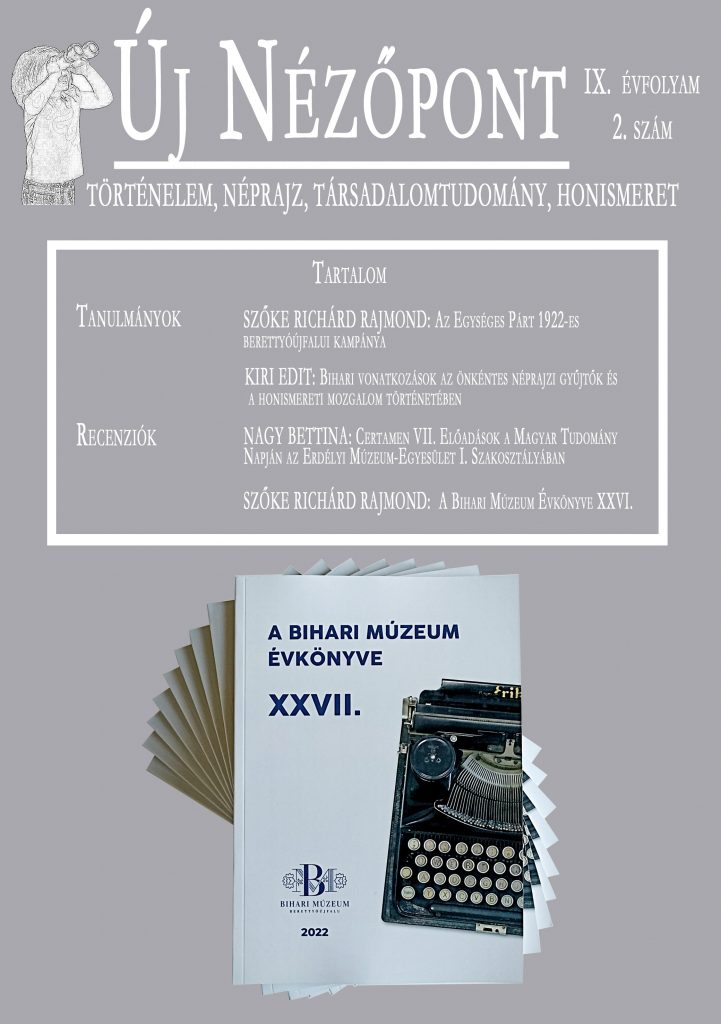
##issue.tableOfContents##
Tanulmányok
-
Az Egységes Párt 1922-es berettyóújfalui kampánya
5-21Megtekintések száma:0After the revolutions and the Trianon Peace Treaty, political life in Hungary continued to face several challenges. This study presents the political atmosphere that resulted the 1922 National Assembly election and its results. Berettyóújfalu was one of the constituencies affected by the new national border. Lajos Szilágyi applied for a mandate as a representative here. He was considered by the public of the time to be an active opposition politician. The United Party, led by István Bethlen and István Nagyatádi Szabó, also entered the fight for representative mandates. The ruling party exerted a lot of power to get its own candidates a mandate, as well as to obstruct the campaign of opposition politicians. This thesis seeks the answer to the question of how the campaign of the United Party took place in the electoral district of Berettyóújfalu, and how this series of events fits into the national election preparations of the governing partyPDF0 -
Bihari vonatkozások az önkéntes néprajzi gyűjtők és a honismereti mozgalom történetében
22-45Megtekintések száma:0In her study, the author presents the major turning points and several Bihar connections of the voluntary ethnographic collection in Hungary. In recent years, several pieces of history of science research works have been published on certain related topics and periods, and we can use these to briefly outline the historical development and institutionalization of voluntary collections. Such major movements and organizations were the following: at the beginning of the 20th century, the Hungarian class of Folklore Fellows; after World War II, the Landscape and Folklore Research; from 1952, the National Ethnographic and Linguistic Collection Tender; from 1968, the Native Land-Presenter Movement; also from 1990, the National Heritage Association; and finally, from 2013, the Tradition Ethnography Collection Tender. With regards to the Hajdú-Bihar County, mention the Cultural Movement ‘Korunk Valósága’ (The Reality of our Time) needs to be mentioned, which had been operating since 1969; and the Cultural Movement from Hortobágy to Sárrét since 1976, as well as the Hajdú-Bihar County and Debrecen Native Land-Presenter Association, which has been operating since 1991.PDF0
Recenziók
-
Certamen VII. Előadások a Magyar Tudomány Napján az Erdélyi Múzeum-Egyesület I. Szakosztályában.
46-53Megtekintések száma:0PDF0
Adatbázis logók




Lapszámok éves bontásban
2026