
Évf. 7 szám 1 (2020)
Megjelent
május 4, 2020
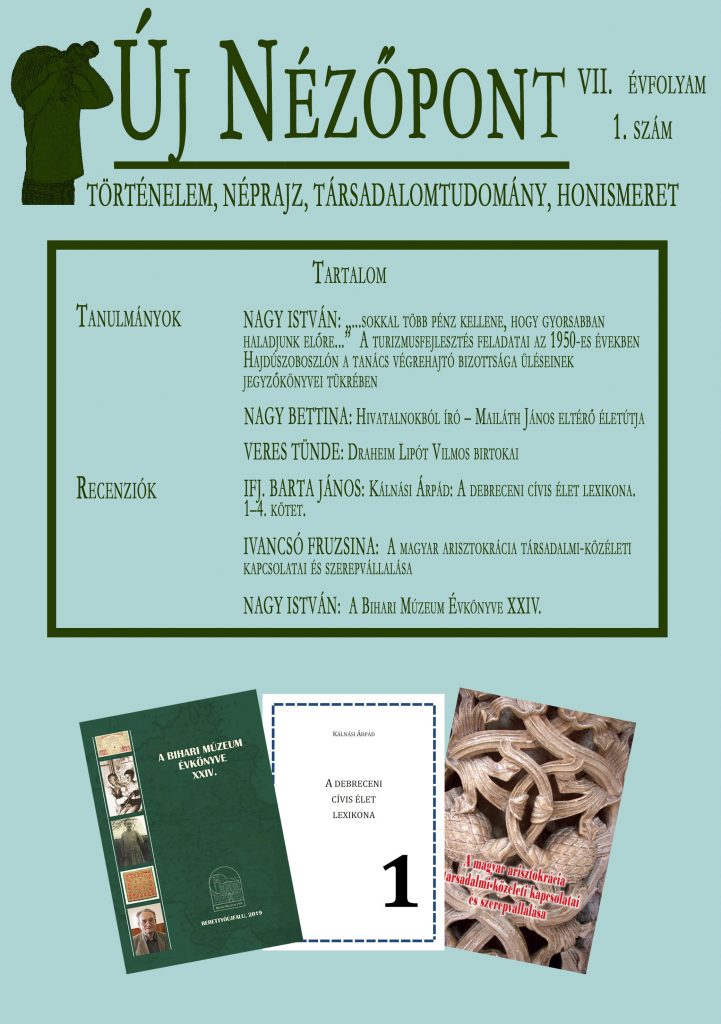
##issue.tableOfContents##
Tanulmányok
-
„…sokkal több pénz kellene, hogy gyorsabban haladjunk előre…” A turizmusfejlesztés feladatai az 1950-es években Hajdúszoboszlón a tanács végrehajtó bizottsága üléseinek jegyzőkönyvei tükrében
5-22Megtekintések száma:2In Hajdúszoboszló, after the exploration of the thermal water in 1925, the tourist attraction and offers of the settlement were established. This study examines the role of city management in tourism development during the “difficult years” of the history of Hungarian tourism, in the 1950s. To present the local tourism policy, the author uses the minutes of the city council executive committee meetings as a source. In Hajdúszoboszló, the tasks of tourism were mostly included in the agenda of the meetings of the council and the executive committee through reports on the annual operations of the three large service companies under the control of the council (Spa Company, Catering Company, Municipal Management Company). Through these, the author presents the ideas of spa development, as well as the steps taken in order to create and improve the additional material conditions of tourism, i.e. the infrastructure and superstructure of tourism.PDF0 -
Hivatalnokból író – Mailáth János eltérő életútja
23-33Megtekintések száma:1In this study, I attempt to present the life of János Mailáth, whose extraordinary lifestyle and literary career made him an outstanding figure. As a descendant of the Mailáth family, he did not pursue the family’s normal career, although he also entered public service for a short time. He gave up his office career because of his eye disease, but turned to literature because of his writing ambitions. In the 1840s, he tried to get famous as a writer and dedicated his works to his so beloved daughter. He maintained a good relationship with prominent representatives of both the German and the Hungarian literature, and in Ferenc Kazinczy he saw the greatest poet of the Hungarian nation. He had significant wealth, but over time became completely indebted. His family tried to access funds for many years in vain. János Mailáth then lived in Vienna and also in Munich, and was supported financially by his brothers and aristocratic acquaintances, but his lack of regular income plunged his family into an increasing misery. He committed suicide due to the overwhelming grip of financial hopelessness and died together with his daughter.PDF0 -
Draheim Lipót Vilmos birtokai
34-42Megtekintések száma:1On April 15, 1685, Abaúj County sent a letter to Imre Thököly to draw the monarch’s attention to the contradictions and abuses of the lawsuit against Vilmos Draheim, and to propose the return of the estates unlawfully confiscated by the Chamber. The mediation of the county also contributed to the fact that Vilmos Draheim, the former prefect of the Spiš Chamber, was able to keep his cattle. However, it is not specified in any document what estates the Chamber confiscates, they are referred to only in a couple of sentences. As part of the life of the former prefect is obscured, it is only possible to reconstruct his estates and their size from the data and letter excerpts from 1682–93. This study undertakes just that, looking for answers to the questions on how Draheim was able to enrich his cattle during his work and how much wealth he left to his children when he died.PDF0
Recenziók
-
A magyar arisztokrácia társadalmi-közéleti kapcsolatai és szerepvállalása
46-47Megtekintések száma:1PDF0
Adatbázis logók




Lapszámok éves bontásban
2026