
Évf. 12 szám 2 (2025)
Megjelent
augusztus 25, 2025
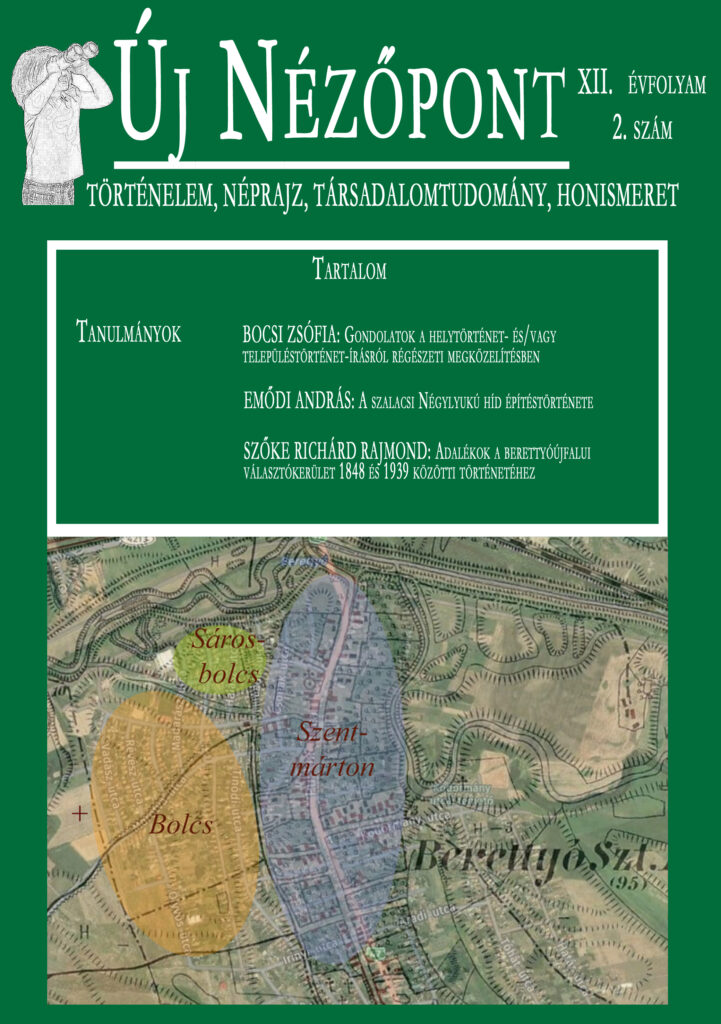
##issue.tableOfContents##
Tanulmányok
-
Gondolatok a helytörténet- és/vagy településtörténet-írásról régészeti megközelítésben
5-32Megtekintések száma:0Defining the place of local and settlement history within the field of historical studies has been a topic of intense emotion and debate since the genre's inception. This paper focuses on the section of local history writing that deals with the early and late Middle Ages, as well as the processing of specialized sources related to this period. The study takes as its starting point a fundamental methodological study published almost half a century ago, and in comparison to it, seeks to present new trends and methods that have emerged in recent decades. In the spirit of interdisciplinarity, particular attention is given to the results of archaeological and natural sciences, which have highlighted the importance and indispensability of environmental history research. The experiences – and the still untapped opportunities in local historical research – are presented through the example of recent settlement history research conducted in the vicinity of Berettyóújfalu.PDF0 -
A szalacsi Négylyukú híd építéstörténete
33-47Megtekintések száma:1Arched brick bridges began to be built in the Great Hungarian Plain and its surrounding areas from the turn of the 18th and 19th centuries. One of the earliest of these is the Four-Hole Bridge located in the vicinity of Szalacs village (Sălacea), in present-day Romania. Our study explores the construction history of this still-standing structure based on archival data.PDF0 -
Adalékok a berettyóújfalui választókerület 1848 és 1939 közötti történetéhez
48-65Megtekintések száma:0Reviewing the history of Hungarian parliamentary and national assembly election processes reveals numerous regional differences in the development of political life; different experiences shaped public affairs in cities and the countryside, which are less apparent at the macro level. This study aims to provide an overview of the Berettyóújfalu electoral district in Bihar County from the introduction of the popular representation system to the last election of the Horthy era, i.e., from 1848 to 1939. The main sources for this overview are the latest specialized literature, archival data, and contemporary press reports. This analysis describes the territorial changes of the electoral district, the evolution of the number of eligible voters, and the identity and party affiliations of the candidate representatives. These three aspects proved suitable for revealing patterns that also delineate new directions for research.PDF0
Adatbázis logók




Lapszámok éves bontásban
2026