
Évf. 74 szám 1 (2025)
Megjelent
2025 március 31
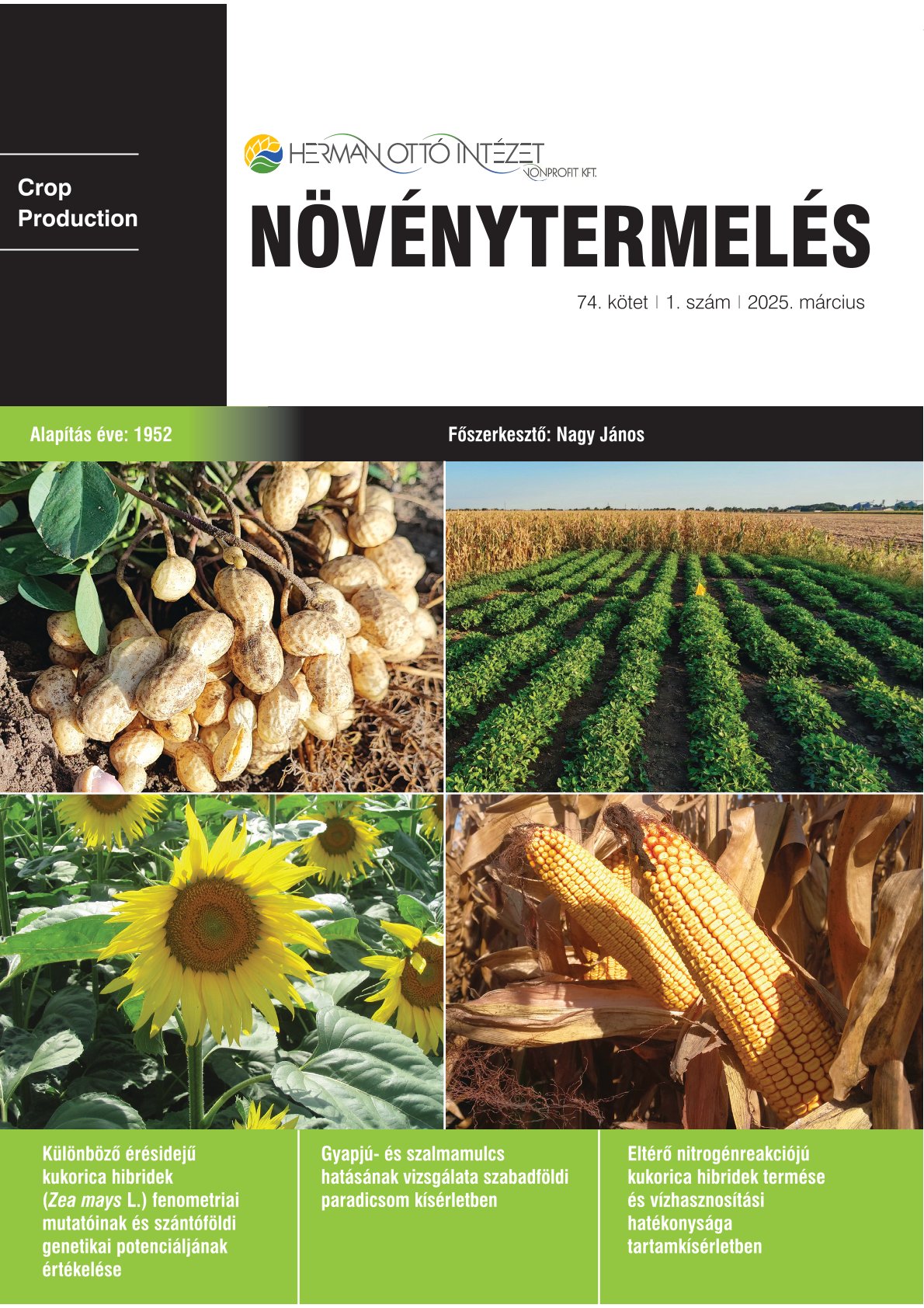
issue.tableOfContents6a6602268a6b3
Folyóiratcikk
-
Különböző érésidejű kukorica hibridek (Zea mays L.) fenometriai mutatóinak és szántóföldi genetikai potenciáljának értékelése
5-21Megtekintések száma:50Szántóföldi tartamkísérleti eredmények alapján értékeltünk két eltérő érés idejű kukorica hibrid fenometriai és termésképző elemeit. Ezek a mutatók nagyban hozzájárulnak a hibridek szántóföldi körülmények közötti ajánlásában a termelők részére és útmutatás adnak a hibridspecifikus termesztéstechnológia kidolgozásában.
A Syngenta Kft. és a Debreceni Egyetem már 2018 óta folytat közös vizsgálatot az új, bevezetésre kerülő hibridek szántóföldi terméspotenciáljának megállapítására. A kísérlet során törekszünk arra, hogy a kukorica optimális feltételeket kapjon és egy napra se éhezzen. A kísérlet során felvételezésre került a hibridek fejlődési fokozatai a növekedési napfok (GDD) mellett. SPAD, NDVI érték folyamatos monitoringozása mellett a vízleadási dinamika is pontos meghatározásra került. 2024 extrém év volt a kukoricatermesztés számára, júliusban és augusztusban extrém magas hőmérséklet jellemezte az országot. A legutolsó betakarítási adatok alapján a hazai átlagtermés 5,7 t/ha (3,4–7,9 t/ha között szórt a megyék között). A 2024-es tenyészév termésdepressziójáért elsősorban a nyári tartós, szélsőségesen meleg időjárás volt a felelős. Az átlagosnál kevesebb csapadékkal párosulva jelentős talajaszály alakult ki.
A fenti kísérletben az SY Evident FAO 430-440 (H13 hibrid) 20,81 t/ha míg az érésidőben korábbi SY Stació FAO 360-380 (H12 hibrid) 19,46 t/ha termést ért el mezoparcellán az egyetem látóképi kísérleti telepén. A vizsgált hibridek eredményére nagy befolyással volt a korai vetésidő, mellyel a hibridek elkerülték a virágzáskori extrém hőséget. Az eltérő genotípusokra nagy hatással volt a harmonikus tápanyag-ellátás és az optimális időjárási viszonyok májusban és júniusban (VE-R1 fázis). Ez statisztikailag igazolható volt a klorofilltartalom (SPAD értékek) és NDVI érték változásában a hibridek között. A szemtelítődés időszakától a fiziológia érettségig (R2-R6 fázis) tartó növekedési stádiumok, a magas GDD értékek és az öntözés által teremtett ideális viszonyok miatt a magasabb érés idejű hibrid (H13) statisztikailag 6,9%-kal haladta meg az igen korai érés idejű (H12) hibridet. A vizsgált hibridek öntözési-vízhasznosítási hatékonysága (IRRWUE) az alábbiak szerint alakultak: az SY Evident (H13) esetében 41,8 kg/mm, míg az SY Stacio (H12) esetében ez az érték 39,2 kg/mm volt.
Az optimális műtrágyázás támogatásával növelhetjük a termést, javíthatjuk a termésbiztonságot és a fenntartható mezőgazdasági gyakorlatot is erősítjük egyidejűleg. Célunk, hogy jövőben üzemi körülmények közé ültessük át ezen eredményeket, kiegészítve a napjaink digitális eszközeinek háttértámogatásával.PDF24 -
Gyapjú- és szalmamulcs hatásának vizsgálata szabadföldi paradicsom kísérletben
23-33Megtekintések száma:45Zsírosgyapjú- és búza szalmamulcs hatását vizsgáltuk a talajnedvesség, talajhőmérséklet értékek és a bogyótermés alakulásában szabadföldi paradicsomnál, agyagos vályogtalajon, kisparcellás kísérletben. Talajnedvesség tekintetében a mulcsozási kezelések és a mérési időpontok (nyolc alkalom) esetében is igazolhatóan kedvezőbb értékeket kaptunk a kontroll paradicsomtövekhez képest. Talajhőmérséklet tekintetében a kezelések között nem, csak a mérési időpontok között volt kimutatható különbség. A bogyótermés mindkét természetes eredetű mulcsféleség esetében meghaladta a kontroll értékeket (4,04 kg/tő), statisztikailag kimutatható különbség mutatkozott a kezeletlen (kontroll) és mulcsozott (szalma-, illetve gyapjútakarásos) kezelések között. A szalmával (7,54 kg/tő), illetve gyapjúval (6,69 kg/tő) mulcsozott kezelések között szignifikáns különbség nem jelentkezett, ugyanakkor gyapjúmulcs esetén több, a gyakorlat számára átadható tapasztalat keletkezett, melyek további kutatómunkára inspirálnak.PDF32 -
Eltérő nitrogénreakciójú kukorica hibridek termése és vízhasznosítási hatékonysága tartamkísérletben
35-48Megtekintések száma:145A precíziós növénytermesztés és a precíziós tápanyag-utánpótlás elengedhetetlen tényező a modern mezőgazdasági gyakorlatban. Az új kukorica hibridek pozicionálása a növények tápanyag-szükségletének és –reakcióinak pontos ismeretében lehetséges. Ahogy éghajlatunk egyre inkább szélsőségessé válik, a növénytermesztés időjárási kitettsége tovább növekszik, amihez a környezethez sikeresen alkalmazkodó hibridek termesztése, nemesítése szükséges. Jelen tanulmányban két Syngenta kukorica hibridet teszteltünk tartamkísérletben hat nitrogéndózis szinten (kontroll N0 0 kg/ha dózis és szintenként 60 kg/ha nitrogén dózissal nőttek a szintek egészen 300 kg/ha-ig), öntözött és öntözetlen platformon. A kísérlet a kukorica számára nem ideális, gyenge csapadék ellátottságú aszályos évben (2021) valósult meg.
Az eredmények alapján két eltérő trágyareakciót mutattak a hibridek. az SY Minervát a „workhorse” (igásló) kategóriába tudjuk sorolni. Ezen csoport hibridjeire jellemző, hogy a változó talajon is elfogadható mennyiségű termést adnak. Nitrogénreakciójuk már alacsony dózisnál (esetleg nitrogén kijuttatása nélkül is – N0+PK 7,23 t/ha és 9,55 t/ha öntözetlen és öntözött platformon) markánsan jelentkezik. Magasabb N-adagoknál a nitrogénreakció mérsékeltebb, illetve termésdepresszió is tapasztalható – mint a kísérleti eredményekben (N240+PK és N300+PK szint között -1,77 t/ha volt a különbség az öntözetlen platformon). A „racehorse” (versenyló) SY Solandri hibrid kezdeti (N0 kg/ha hatóanyag) nitrogénreakciója alacsony, azonban a nitrogéndózis magas szintre emelésével – ideálishoz közeli környezeti feltételek mellett – kiemelkedő termésmennyiség-növekedést mutat. Ez egyértelműen leszűrhető a N0+PK és az N240+PK szintekre adott termésválaszával mindkét platformon.
Öntözetlen és öntözött platformon a következőképp alakultak a terményeredmények: N0+PK szintnél 4,62 t/ha, illetve 6,11 t/ha; N240+PK szintnél 10,94 t/ha és 13,25 t/ha. Az SY Minerva kiemelkedő vízhasznosítási eredményeket mutatott mindkét kezelés esetében 44,4 kg és 40,1 kg/mm értékekkel a kontroll parcellákon (N0+PK). Az SY Solandri WUE (vízhasznosulási hatékonyság) és IRRWUE (öntözött vízhasznosulási hatékonyság) értékei ezektől lényegesen alacsonyabbak voltak (28,3 és 25,7 kg/mm). Az öntözés az optimális N240+PK ellátás esetén kimagasló eredményeket mutatott mindkét hibridnél mindkét platform esetén. Az SY Solandri az öntözetlen kezelésében rendkívül magas 67,1 kg mm értéket kaptunk.
A kapott kutatási eredmények alapján megállapítható, hogy a genotípusnak nagy szerepe van a vízhasznosulási hatékonyság alakulásában, a trágyázás a kontroll parcellához képest mindkét vizsgált hibridnél pozitív módon befolyásolta a WUE és IRRWUE értékeket.PDF27 -
A kukorica (Zea mays L.) hibridek egyedi paramétereinek elemzése öntözéses tartamkísérletben
49-83Megtekintések száma:45A növénytermesztés fenntartható fejlesztése napjaink egyik legfontosabb agronómiai kihívása. A modern technológiák, például a precíziós gazdálkodás, köztük a tápanyag-gazdálkodási és öntözési stratégiák kulcsszerepet játszanak a terméshozam optimalizálásában és a fenntarthatóság biztosításában. A DE AKIT DTTI Látóképi Növénytermesztési Kísérleti Telepen beállított kísérletben intenzív termesztéstechnológia alkalmazása mellett vizsgáltuk négy eltérő érésidővel jellemezhető kukorica hibrid (FAO 350, 390, 410 és 550) fenometriai (levélterület-index, fejlődésdinamika), fiziológiai (relatív klorofilltartalom, NDVI érték, vízleadási dinamika), valamint termésparamétereit (termésmennyiség, egyedi cső- és szemtömeg, egyedi szemszám, ezermagtömeg, fehérje-, olaj-, keményítő- és szemnedvesség-tartalom). A termésmennyiség értékelése alapján megállapítottuk, hogy a legmagasabb termést (20,95 t/ha) a középérésű, FAO 390 hibrid érte el, szignifikánsan meghaladva a többi vizsgált hibrid terméseredményét. Összességében megállapítottuk, hogy az egyes különböző érésidejű kukorica hibridek között a vizsgált fenometriai, fiziológiai és termésparaméterekben jelentős, számos esetben statisztikailag igazoltható különbségek voltak, lehetővé téve az egyes hibridek főbb tulajdonságainak pontos elkülönítését.PDF29 -
A kukorica (Zea mays L.) paramétereinek értékelése a fenofázisokban – a hőösszegek függvényében – öntözéses termesztésben
85-103Megtekintések száma:252Magyarországon a kukorica az egyik legnagyobb területen termesztett kultúrnövény, vetésterülete stabil, 0,8–1 millió hektár. Ennek oka a növény rendkívüli terméshozama, amely lehetővé teszi, hogy egységnyi területen jelentős mennyiségű értéket állítsunk elő. A hazai termelés elsősorban takarmányozási célt szolgál – különösen a baromfi- és sertéságazatban, valamint kérődző állatok etetésére. Felhasználása nemcsak élelmiszer formájában vagy takarmánynövényként történik, hanem olaj, bioetanol és energia-előállításában is egyre nagyobb szerepet kap. A kukorica beltartalmi értékei – fehérje-, keményítő- és olajtartalom – meghatározó szerepet játszanak az ipari, a takarmány és az élelmiszeripari felhasználásában. A kukorica tápanyag-ellátása elengedhetetlen a növényfejlődés biztosításához. A megfelelő tápanyag-pótlás igen fontos a fenntartható gazdálkodás és a magas terméshozamok biztosításához. Az alkalmazott tápanyag-adagokat úgy kell a növény igényeihez igazítani, hogy a hibridek jól tolerálják az évjárathatások okozta stresszt, és a termésbiztonság fenntartható maradjon.
A vízhiány az egyik legkomolyabb abiotikus stressz, amely negatívan befolyásolja a növények növekedését, fejlődését és terméshozamát. Az extrém időjárási viszonyok csökkentik a terméshozamot és veszélyeztetik a termelés stabilitását. A kukorica beltartalmi értékei, minősége és ipari felhasználása szorosan összefügg a genetikai, ökológiai és agrotechnikai tényezőkkel. A megfelelő hibrid kiválasztásával és az ehhez alkalmazkodó termesztéstechnológia alkalmazásával a beltartalmi mutatók a különböző célokhoz illeszthetők. A 2024-es évre vonatkozó agrotechnikai vizsgálatok során elemeztük a fő termésmeghatározó tényezőket, az egyes agrotechnikai elemek, illetve fenofázisok vonatkozásában értékeltük az időjárást is. A kutatás elsősorban a Debreceni Egyetem Látóképi Kísérleti Telepén folyó meteorológiai mérések adatain alapulnak. A 2023/24-es téli félévben 6 hónap alatt 283 mm csapadék hullott, ami 69 mm-rel meghaladja a sokéves átlagot. Júniusban a szélsőségektől mentes, kiegyenlített, de a sokévi átlagnál magasabb hőmérsékletű időjárás volt. Az átlagnak megfelelő mennyiségű csapadék (66 mm), a talaj mélyebb rétegeiben lévő talajnedvességgel együtt jó vízellátottságot biztosított.
Mind a júliusi, mind az augusztusi középhőmérséklet rekord közelében alakult (24,2 °C). Az augusztusi rendkívüli meleg (a hónap közepe, vége) elsősorban az érési fázis lerövidülésében nyilvánult meg. A júliusi 29 mm-nyi csapadék nem érte el a sokévi átlag felét és az ezt követő augusztus hónap is száraz volt (33 mm). A nyári teljes csapadékösszeg 128 mm volt. Szeptember elején folytatódott az évszakhoz képest rendkívül meleg idő, az első dekád közel 7 °C-os pozitív anomáliát mutatott. A kukorica fiziológiai érettsége és gyors vízleadása, száradása lehetővé tette a korai betakarítást. A 2024-es évet a kukoricatermesztés szempontjából határozott kettősség jellemezte.
Szántóföldi kukorica tartamkísérleteink lehetővé tették a teljes tenyészidőszak alatt a növények fenofázisainak felvételezését (Hanway-skála). Új eredménynek számít, hogy elemzéseink szerint – különösen a generatív szakaszban – pontosabb adatokat kaptunk a hasznos hőösszeg (HU) számításokat figyelembe véve. A keléstől a nővirágzásig 60 nap telt el 545 HU hőösszeg felhasználásával. A nővirágzástól a viaszérésig (R4) 32 napra és 422 HU-ra volt szükség. Megállapítottuk, hogy a nővirágzástól a fiziológiai érésig a genotípusra jellemzően, 815 HU-ra volt szükség. A H470-es kukorica hibrid termőképessége öntözéses termesztésben kiváló (20,76 t/ha). A hibrid szárazanyag-beépülési dinamikája kiemelkedő. Hetente mértük a szárazanyag-gyarapodást. A fiziológiai érés fenofázisban (2024. augusztus 30.) 1360 HU felhasználásával a szárazanyag-tartalom 77,1% volt. A szárazanyag-tartalom mérések lehetővé tették a kiváló termőképességű kukorica hibrid vízleadási dinamikájának értékelését. A méréseket, elemzéseket hétnaponta végeztük. A vízleadás mértéke az első héten 5,5%, a második héten 5,8%, a harmadik héten 4,6%, a negyedik héten 6,9% volt. A fiziológiai éréskor a szemnedvesség kedvező értéket mutatott (22,9%). A fiziológiai érést követően a 21 napos időszak alatt a napi vízleadás 0,23% volt.PDF28
Review
-
A földimogyoró termesztés nemzetközi és hazai helyzete, kihívások, lehetőségek a magyar agráriumban
105-120Megtekintések száma:155A földimogyoró az egyik legszélesebb körben fogyasztott olajos mag a világon, az Egyesült Államok Mezőgazdasági Minisztériumának (USDA) jelentése szerint 2024-ben 50,48 millió tonna földimogyorót termeltek világszerte (Agrocrops 2024, USDA 2025).
A földimogyorót többféleképpen is felhasználják – kulcsfontosságú összetevőként számos rágcsálnivalóban, édességben és a mogyoróvajban, valamint fehérjében gazdag takarmányként az állati takarmányozásában. Ugyanígy a földimogyoró-olajat sütéshez, a földimogyorólisztet főzéshez, és a földimogyoró héjat fűtésre.
A földimogyoró termesztése új korszakot nyithat a hazai mezőgazdaságban. Mint ismert, a földimogyoró termesztése egyre fontosabbá válik a világ mezőgazdaságban, hiszen tápláló értéke és sokoldalúsága miatt világszerte népszerű növény. A nemzetközi piacon a földimogyoró iránti kereslet folyamatosan növekszik, különösen az egészségtudatos fogyasztók körében.
A legtöbb földimogyoró éves viszonylatban Kínában terem. A piaci statisztikák szerint a legjobb minőségű termés Argentína és az USA farmjairól kerül ki, nagy mennyiségben pedig Ázsiában termesztik (Agrocrops 2024).
A földimogyoró Európába első ízben 1840-ben Jaubert útján került, még pedig a Cap Verdei szigetekről Marseilles-be. Készítettek belőle egy időben kávépótlékot is. A két sziklevélre szétválasztott és megpörkölt mag afrikai dióbabkávé néven 1925-ben került a Német Birodalomban és Svájcban forgalomba (Agrártudományi Közlemények 09/1957). König szerint azonban a hámozott, zsírtalanított és pörkölt földidió Austria-kávé néven szerepelt a kereskedelemben (MTA Urania 1923, Ortutay 1977).
Magyarországon az 1930-as években az Alföldi Mezőgazdasági Kísérleti Intézet foglalkozott földimogyoró-termesztési kísérletekkel. Az 1950-es években Bruder János irányításával Mezőhegyes és Medgyesegyháza környékén 300 hektáron folyt földimogyoró-termesztés (MTA Urania 1923, Tétényi 1951, Karakasevich 1957). A világ mezőgazdaságában rangos helyet elfoglaló földimogyoró a múlt század elején bekerült ugyan a hazai kultúrflórába, de a kezdeti sikerek ellenére mégsem vált igazán jelentős haszonnövénnyé Magyarországon. Napjainkra a magyar földimogyoró a klímaváltozás nyertese az elmúlt évek tapasztalatai alapján (Balla 2021).PDF27
Historical review
-
100 év a magyar mezőgazdaság és kutatás szolgálatában – 100 éves a szegedi Gabonakutató Nonprofit Közhasznú Kft.
121-132Megtekintések száma:52PDF32
Adatbázis logók


Keywords
Make a Submission
Lapszámok éves bontásban