
Folyóiratcikk
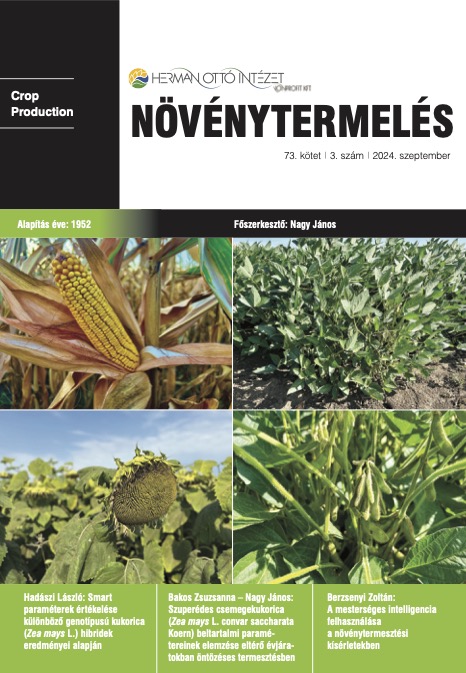
A mesterséges intelligencia felhasználása a növénytermesztési kísérletekben
Megjelent:
2024-09-30
 https://doi.org/10.12666/5grtnv65
Szerző
Megtekintés
Kulcsszavak
fenntartható intenzifikáció precíziós mezőgazdaság mesterséges intelligencia gépi tanulás termés előrejelzés
Licenc
Copyright (c) 2024 Zoltán Berzsenyi

This work is licensed under a Creative Commons Attribution 4.0 International License.
Hogyan hivatkozzuk
Kiválasztott formátum:
APA
Berzsenyi, Z. (2024). A mesterséges intelligencia felhasználása a növénytermesztési kísérletekben. Növénytermelés, 73(3), 47-66. https://doi.org/10.12666/5grtnv65
Absztrakt
Az összefüggések megértése a termés, a talajtulajdonságok, az időjárás és az input applikáció között fontos a mezőgazdasági produkció optimalizálásához. A fenntartható intenzifikáció célja, hogy növeljük a produktivitást és az inputfelhasználás hatékonyságát, miközben fokozzuk a mezőgazdasági rendszerek rugalmasságát a kedvezőtlen környezeti tényezőkre a javított menedzsmenten és technológián keresztül. A mesterséges intelligencia (AI) a precíziós gazdálkodásban (PA) lehetővé teszi a gazdálkodóknak, hogy nagyon célirányos és pontos termesztési eljárásokat használjanak a helyspecifikus agroklimatikus szántóföldi mérések alapján. A legújabb fejlesztések az érzékelésben, a gépi tanulásban (ML) és a modellezésben lehetőséget kínálnak az új digitális technológiákra, hogy megvalósítsuk a fenntartható intenzifikációt.
Az újabb tudományos publikációk áttekintése alapján bemutattuk a digitális technológia alkalmazását a növénytermesztési kísérletekben három területen: (i) növény- és talajtulajdonságok folyamatos monitorozása, (ii) termésreakció térbeni és időbeni variabilitásának vizsgálata és (iii) gépi tanulás (ML) modellek felhasználása a termés előrejelzésére. Levonható az a következtetés, hogy az adatok varianciájának analízise, felhasználva a statisztikai és gépi tanulás megközelítéseket, segíthet azonosítani és megérteni azokat a termesztési eljárásokat, melyek optimalizálják a termést.
Az újabb tudományos publikációk áttekintése alapján bemutattuk a digitális technológia alkalmazását a növénytermesztési kísérletekben három területen: (i) növény- és talajtulajdonságok folyamatos monitorozása, (ii) termésreakció térbeni és időbeni variabilitásának vizsgálata és (iii) gépi tanulás (ML) modellek felhasználása a termés előrejelzésére. Levonható az a következtetés, hogy az adatok varianciájának analízise, felhasználva a statisztikai és gépi tanulás megközelítéseket, segíthet azonosítani és megérteni azokat a termesztési eljárásokat, melyek optimalizálják a termést.

